If you have ever tried to talk yourself out of anxiety, you already know it does not work. You can list every reason you are safe and still feel your chest tighten, your thoughts speed up, and your body brace for something that is not there. That is not weakness, and it is not a flaw in your character.
It is a nervous system stuck on high alert. And a stuck system can be coaxed back down, just not the way most people try.
Why you cannot think your way calm
Anxiety does not start in the thinking brain. It starts in an older, faster alarm system that scans for threat below conscious thought and fires long before reason gets a vote. That is why reasoning with it rarely lands. By the time you are talking to yourself, the alarm has already gone off.
The way in is the body. The nervous system does not speak in arguments, it speaks in signals: breath, movement, posture, safety. Give it the right signals and the alarm stands down on its own. The thoughts settle after the body does, not before. So we always start with the body. But once the body is calmer, the thinking brain comes back online, and then the mind becomes one of your best tools, which is exactly what tool two puts to work.
Tool one: slow breathing, for the spike
This is the fastest free tool you have, and it works in minutes. When anxiety spikes, breathe in for about four counts and out for six or more, through the nose, down into the lower belly. The long exhale is the active ingredient.
A systematic review of voluntary slow breathing found it raises heart rate variability and shifts the autonomic nervous system toward parasympathetic, rest and repair, dominance. A broader meta-analysis of breathwork trials found breathwork was associated with lower stress and better mental health. This is the one to reach for in the moment, in line at the store, in the car, in a meeting. Nobody has to know you are doing it.
Tool two: name it, then reason with it
Here is where the mind comes back in, and it is more powerful than that first section might have made it sound. You cannot reason with a blaring alarm, which is why the breath comes first. But once the volume drops, the thinking brain is back online, and now you have two real tools waiting.
The first is to name what you are feeling. Not to fix it, just to name it. My chest is tight and I feel afraid. There is that same dread again. It sounds too simple to matter, and it is one of the most studied moves there is. In brain imaging work, putting a feeling into words was shown to quiet activity in the amygdala, the brain's alarm center, almost as if naming the thing turns its volume down. So you breathe, and then you say what is here, out loud or on paper, and the feeling loosens its grip a little just from being named.
The second is to reason with it, gently and specifically. Once you are calmer, remind yourself where you actually are and why you are safe right now, in this room, in this moment, and say plainly that the anxious thought is a prediction, not a fact. Your alarm is telling a story about danger that is usually not true. Naming that gap, this is fear talking, not truth, is a skill researchers call cognitive reappraisal, and a meta-analysis of emotion-regulation strategies found that reframing a situation this way is one of the most effective ways there is to bring a feeling down. So yes, technically this is using your mind. You just have to calm the body enough first for the mind to be able to help.
Tool three: movement, for the baseline
Breathing handles the spike. Movement lowers the floor the spikes start from. You do not have to train hard, and for an anxious, depleted system you should not. Gentle, regular movement is what changes the baseline.
A meta-analysis of randomized trials on exercise and anxiety found exercise produced a meaningful reduction in anxiety compared with no treatment. Walking in nature, Qigong, easy strength work, all of it counts. The point is consistency, not intensity. Twenty minutes most days does more for an anxious nervous system than a punishing session once a week.
Go Deeper
The Anxiety Upgrade
Calm an anxious nervous system with the science-backed and energetic tools Jess teaches, including the somatic shaking that resets the vagus nerve.
Explore the course →Tool four: meditation, for the relationship with thought
A racing mind is the normal starting point, not proof you are bad at this. Meditation does not mean emptying your head. It means noticing you have drifted and gently coming back, again and again. That return is the entire skill, and it slowly changes your relationship with anxious thought so the thoughts stop running the show.
A meta-analysis in JAMA Internal Medicine found mindfulness meditation programs produced moderate improvements in anxiety, depression, and pain. Start with five minutes. Sit, follow the breath, and when you notice you have wandered into the future, come back. That is one repetition. Do a few dozen and you have meditated.
Tool five: clearing the charge underneath
Sometimes you do all of it, breath and movement and meditation, and a low hum of anxiety stays. That usually means the charge sits at a deeper layer than the foundational tools reach, often an old fear or imprint the body is still holding. That is where energy work comes in, clearing the field so the nervous system is not constantly set off again from the inside.
This is also the work behind The Anxiety Upgrade, which pairs these science-backed nervous system tools with energetic practices to calm an anxious nervous system at both layers at once.
One more layer, and this one does the work for you
Every tool so far asks something of you. You have to remember to breathe, to name the feeling, to move, to sit and come back. That effort is exactly why they work, but on the hardest days, when the anxiety is loudest, doing anything at all is the part that feels impossible. So here is the one layer that runs in the background and asks nothing of you.
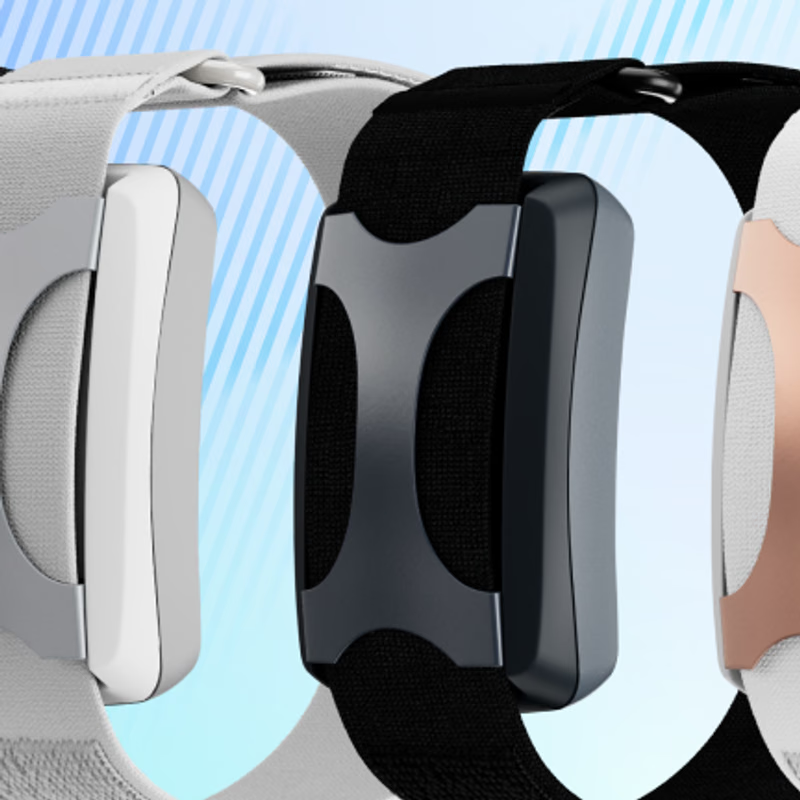
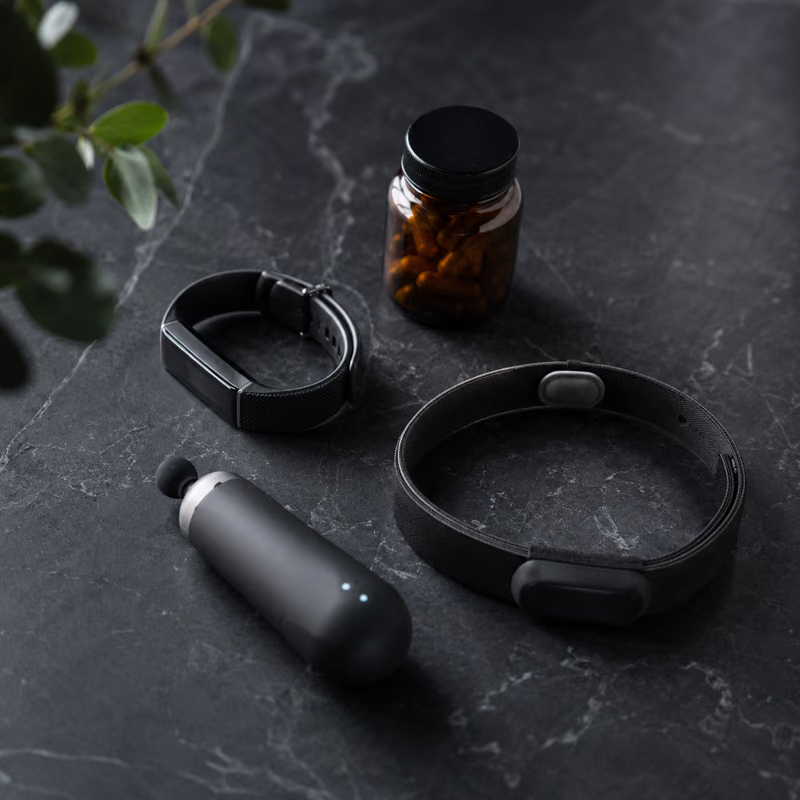
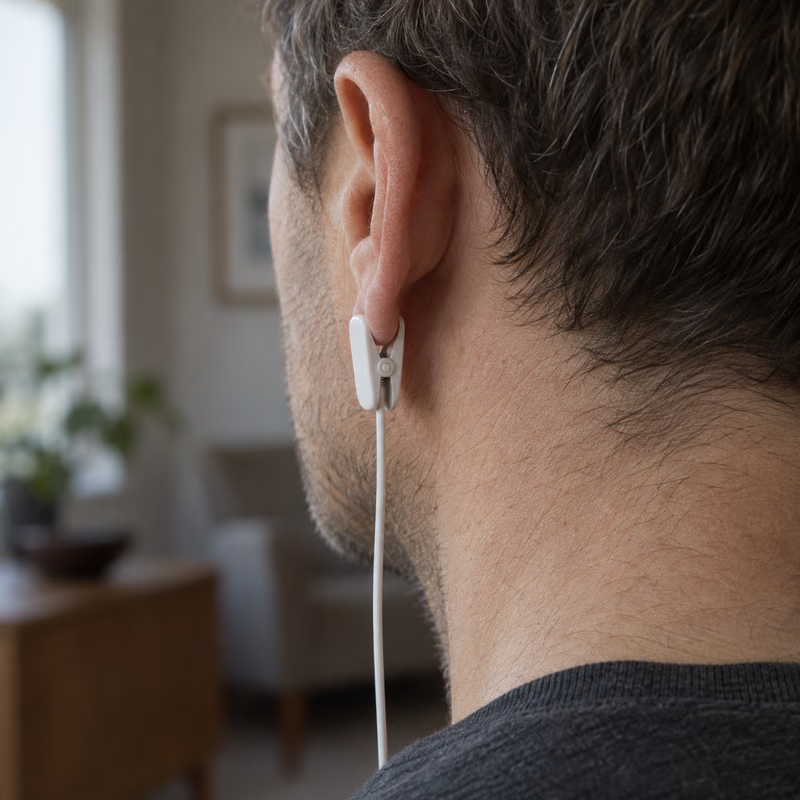
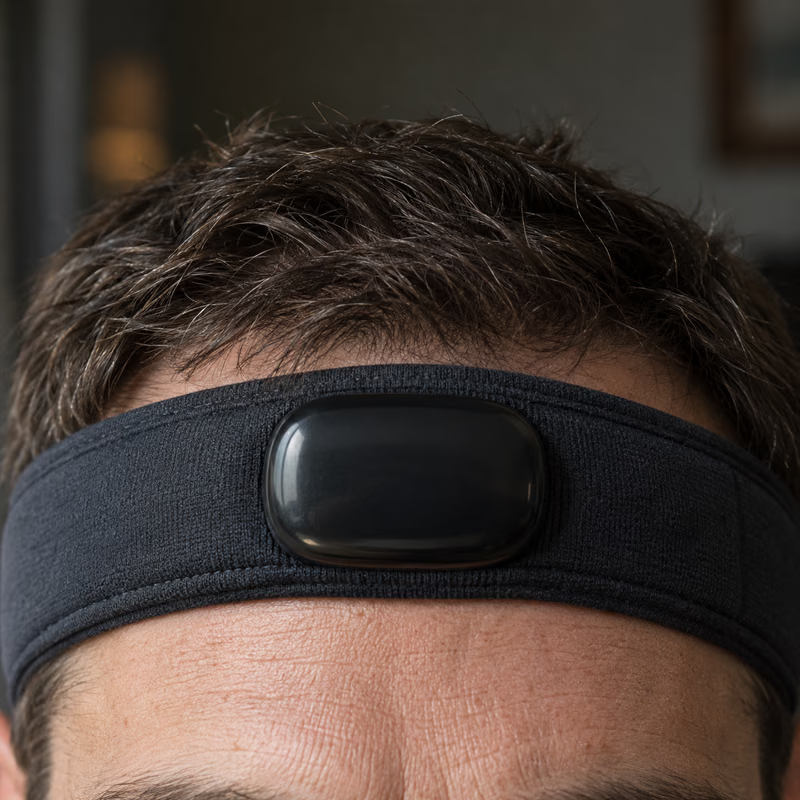
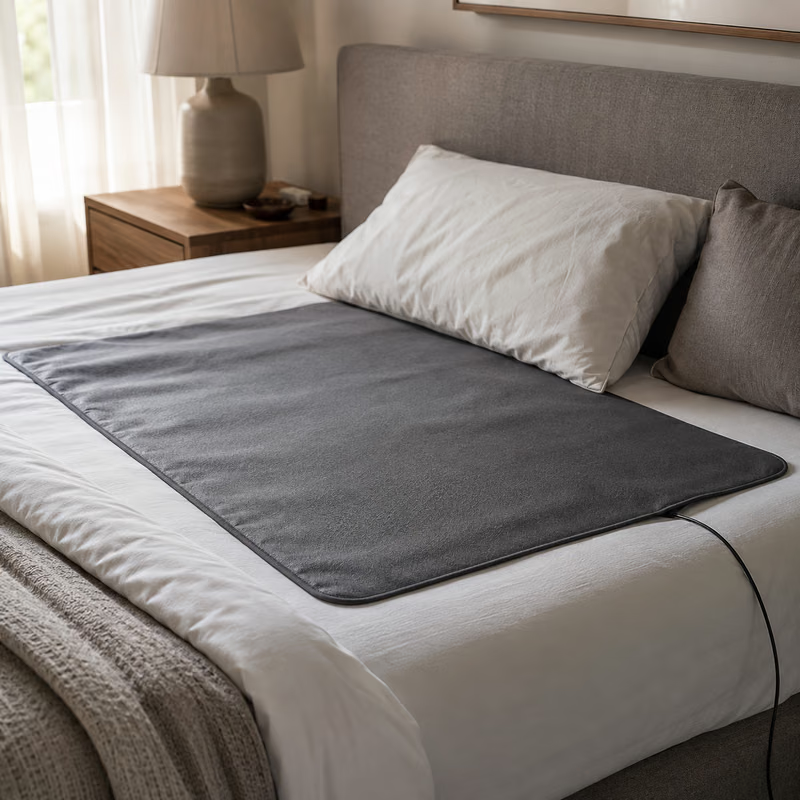
There are wearables that gently work your vagus nerve, the main cable of your calm-down system, all day long while you do nothing. The one I reach for most is the Apollo Neuro. It is not an electric shock gadget. It rests on your wrist or ankle and sends gentle waves of vibration that tune your nervous system toward calm. And this is not just a nice idea. In a double-blind, placebo-controlled trial, that vibration raised parasympathetic heart rate variability, the direct marker of your rest and repair branch coming online, and a separate randomized controlled trial found that wearing it lowered burnout over twelve weeks.
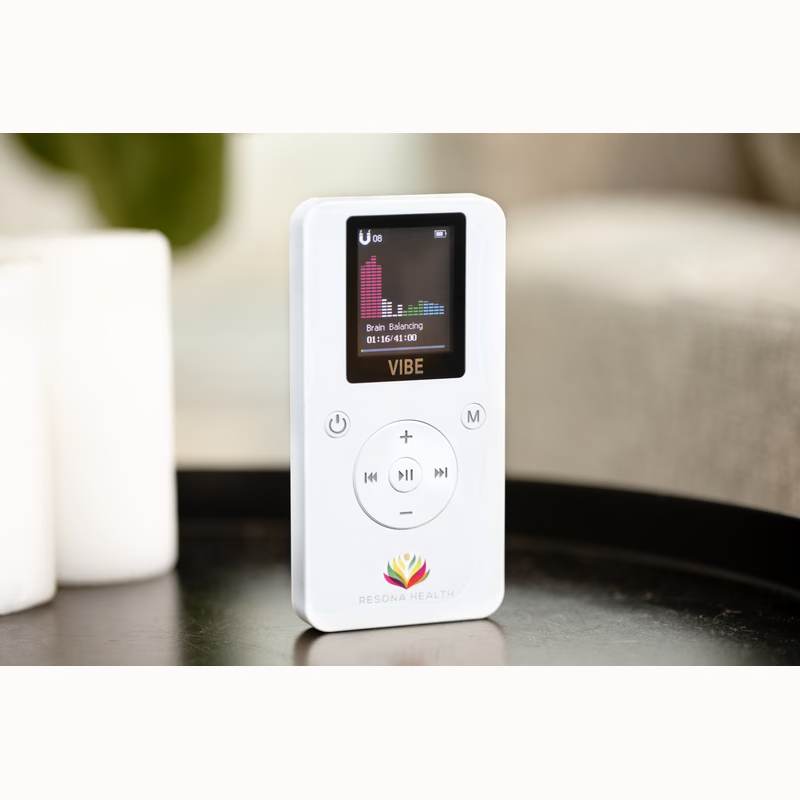
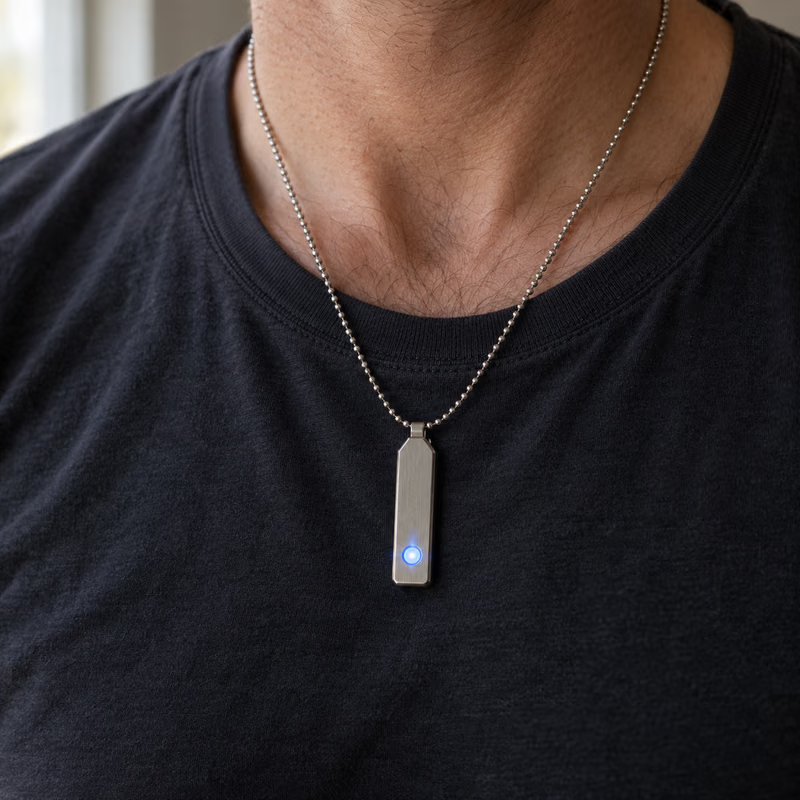
I also wear the Resona Vibe and the VaguVibe pendant. They use gentle pulsed electromagnetic fields to lean the nervous system the same direction, and the VaguVibe sits right over the cluster of vagus fibers by the heart and runs one continuous calm setting all day with no setup at all. I am telling you about these as someone who lived it. These wearables were part of how I got free of my own panic attacks, quietly working my nervous system for me in the background while I did the rest of the work on top.
Here is the honest part, because I owe it to you. These are the only tools in this whole piece that cost money, which is exactly why I put them last. Your breath is free, and it is still the foundation. But if you want a steady hand on your nervous system all day with none of your own effort, this is the layer that gives it to you. I go deep on the whole toolkit, the free exercises and the gear side by side, in vagus nerve exercises.
One honest boundary
None of it replaces professional care. If anxiety is persistent, disrupts your life, or comes with panic, hopelessness, or thoughts of self harm, work with a licensed professional. These tools are complements to that care. If you are in crisis in the US, call or text 988 for the Suicide and Crisis Lifeline.
Your nervous system is not broken. It learned to stay on alert to keep you safe, and it can learn to stand down. You give it the signal through the body, one slow breath at a time.
Your calm has been waiting underneath the noise.