Hum one low note right now. Not out loud if you are somewhere public, just under your breath, a low steady mmmmm, and hold it for a few seconds until you run out of air. Feel that soft buzz spread through your chest and the back of your throat.
You just touched the nerve this whole post is about. That is the vagus nerve, and that low hum is one of the oldest, simplest ways humans have ever had to reach it.
The quick answer, before anything else
The vagus nerve is the main cable of your rest and repair system, and vagus nerve exercises are simple physical actions, a long exhale, a hum, cold water on the face, that signal it to bring your body back down out of high alert. You cannot do it with thinking. You do it through the body, and the strongest, most researched tool of the set is a slow breath with a long exhale.
That is the entire thing in two sentences. The rest of this post is why it works, which practices to reach for in what order, and which tools are genuinely worth owning once the free ones are a habit.
What the vagus nerve actually is
Your nervous system has two main gears. One is the gas pedal, fight or flight, the surge that gets you ready to run. The other is the brake, rest and digest, the branch that slows the heart, settles the gut, and lets the body repair. The vagus nerve is the largest nerve of that braking branch. It wanders from your brainstem down through your throat, your heart, your lungs, and into your gut, which is where it gets its name, vagus, the wanderer.
Here is the part that matters for anyone who feels wired, anxious, or stuck on. That brake is not a metaphor. It is a physical circuit, and physical circuits respond to physical signals. When people talk about vagal tone, they mean roughly how readily your system can hit that brake, and one common way researchers estimate it is heart rate variability, the small natural changes in the time between your heartbeats.
You cannot argue your way onto the brake. You have tried, if you have ever told yourself to calm down and felt nothing change. But you can send the nerve a signal it is built to answer.
Tool one, the long exhale, the strongest lever you have
If you do only one thing on this list, do this. Breathe in for about four counts, then out for six or more, through the nose, down into the lower belly. The long exhale is the active ingredient, because your heart naturally slows a little every time you breathe out, and stretching the exhale leans on that effect on purpose.
This is where the science is strongest. A systematic review and meta-analysis of voluntary slow breathing found it raises heart rate variability and shifts the autonomic nervous system toward parasympathetic, rest and repair, dominance. That is the measurable face of hitting the brake. It is free, nobody can see you doing it, and it works in the checkout line, in the car, in the meeting you did not want to be in.
Everything else on this ladder is a way to add to this, not to replace it.
Tool two, humming and chanting, a real mechanism you can feel
Now back to that hum you started with. A hum is a long exhale with a vibration riding on top of it, and both of those things point the body toward calm. This is why humming, chanting, and the drawn-out om of a yoga class have shown up in calming traditions for thousands of years, long before anyone could measure a heartbeat.
A pilot brain-imaging study of OM chanting found the vibration quieted activity in emotion-related regions of the brain, in a pattern the researchers compared to what is seen with vagus nerve stimulation. It is one study, and an early one, and I would rather you feel it than take my word for it.
So here is how I hold it. Humming is free, it feels good, it has thousands of years of calming traditions behind it and a plausible mechanism underneath it. That is more than enough reason to make it a habit. Feel the difference for yourself before you believe me.
Tool three, cold water on the face, the fastest physical reset
This one is the closest thing to an off switch you have, and it works in seconds. Splash cold water on your face, or press a cold, wet cloth over your eyes and cheeks, or if you want the strong version, dip your face into a bowl of cold water for a few seconds and hold your breath.
Cold on the face triggers an ancient reflex you were born with, the same one that lets a seal slow its heart underwater. When the cold hits the skin around your eyes and nose, the vagus nerve slows the heart. A study of cold-water face immersion found the slowing was driven mainly by cardiac vagal activity, independent of the breath hold or bending over. This is the tool to reach for when a wave of panic hits and breathing alone is not landing fast enough. Powerful means you treat it with respect, so go gentle if you have any heart condition, and check with your doctor first if you do.
Tool four, somatic completion, letting the body finish what it started
Here is one almost nobody teaches, and it might be the most powerful one on this list. Watch an animal right after a near miss, a gazelle that just outran something with teeth. The second it is safe, it shakes. Its whole body trembles hard for a minute, and then it stops, shakes it off, and walks back to the herd completely calm.
Go Deeper
The Anxiety Upgrade
The full nervous-system reset, including the somatic and Qigong shaking that tones the vagus nerve. The complete practice behind this essay.
Explore the course →That shake is not random. It is the body discharging the huge surge of survival energy it just mobilized, finishing the stress response instead of leaving it half done. We are the only animals that override it. Something frightens us, our system floods, and then we sit still, hold it together, and never let the charge complete. So it stays. It sits in the body as that wired, buzzing, cannot quite settle feeling, and it holds the gas pedal down long after the moment has passed.
Somatic completion is just giving the body permission to finish. Stand up and let yourself shake, hands, arms, legs, a loose easy tremble for thirty to sixty seconds, no choreography, just let it move through you. Or push hard against a wall with both hands for a few seconds, putting the fight your body wanted into something solid, then release and let a big shuddering breath fall out of you. It can feel strange the first time. It can also drop you into a calm you have been chasing all day, in about a minute.
This lives in two worlds at once. It comes from somatic therapy, the body-based trauma work of teachers like Peter Levine, and the broader approach has real evidence under it, a randomized controlled trial of Somatic Experiencing found it meaningfully reduced post traumatic stress symptoms against a control group. It is also an ancient qigong practice, and I teach a guided version of qigong shaking, step by step, inside my Spiritual Protection, Anxiety Upgrade, and Strength Upgrade courses. The gentle daily version is yours to use any time the day leaves a charge in your body that the breath alone will not move.
Tool five, gentle movement and gargling, the low-stakes extras
A couple of smaller practices round out the ladder, low-stakes and easy, the kind of thing worth keeping in your back pocket.
Gargling water firmly for a few seconds engages the muscles at the back of the throat that the vagus nerve helps run, and some people use it as a daily nudge. Gentle, rhythmic movement, an easy walk, slow Qigong, an unhurried stretch, keeps the whole rest-and-repair branch in better shape over time. Neither one is a miracle. Both are cheap, safe, and easy to fold into a day, which is exactly why they earn a spot near the bottom of the list.
The gear, and what the studies actually show
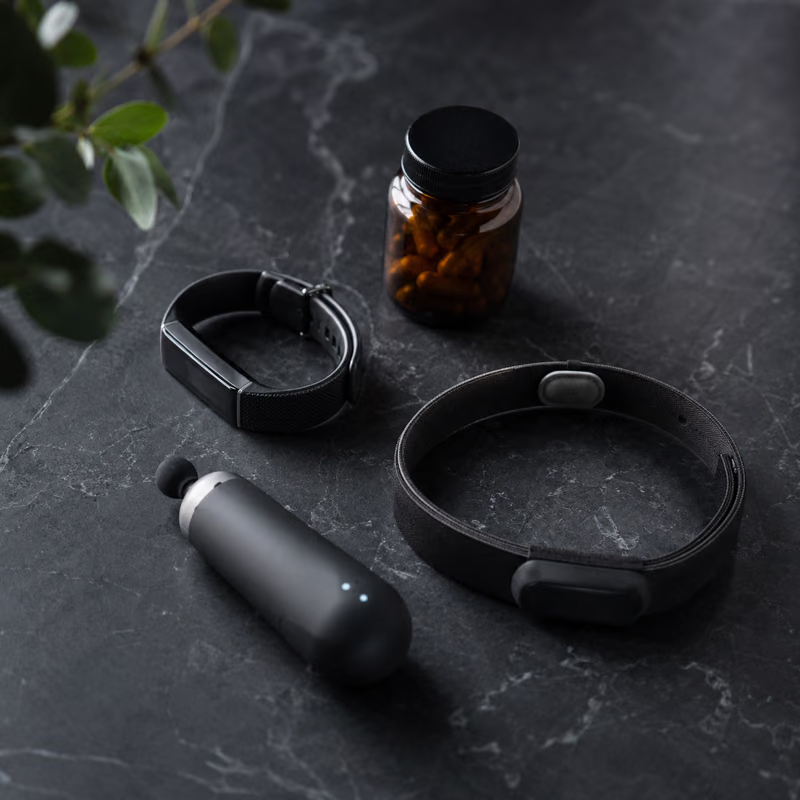
You have probably seen the wearables, the ones that promise to work your vagus nerve for you. I use a few every single day, so let me tell you what they are and what the research actually found. This is where most articles either hype the gadgets or wave them away, and neither one is honest.
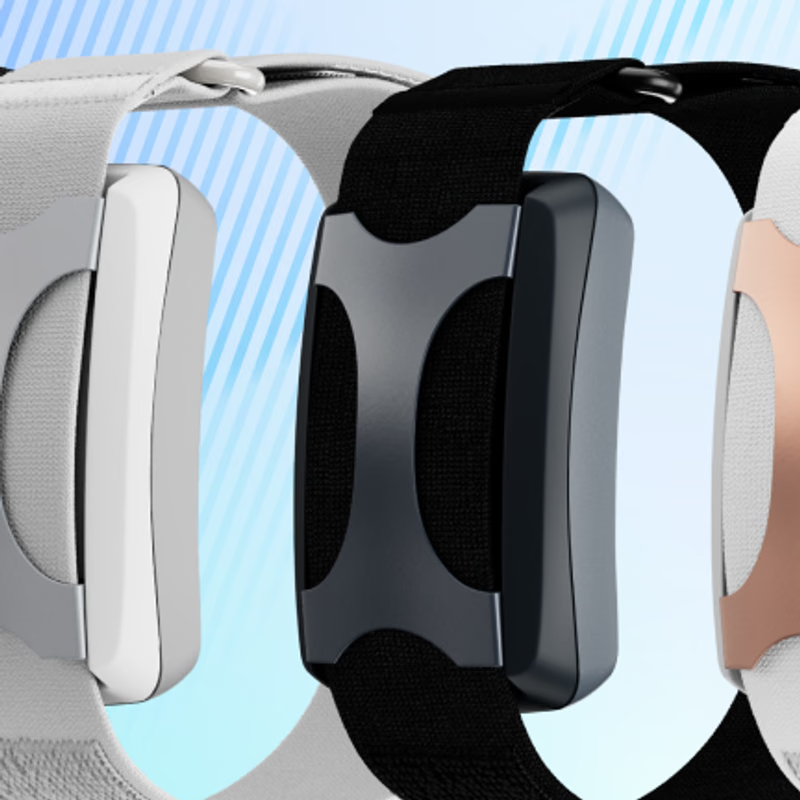
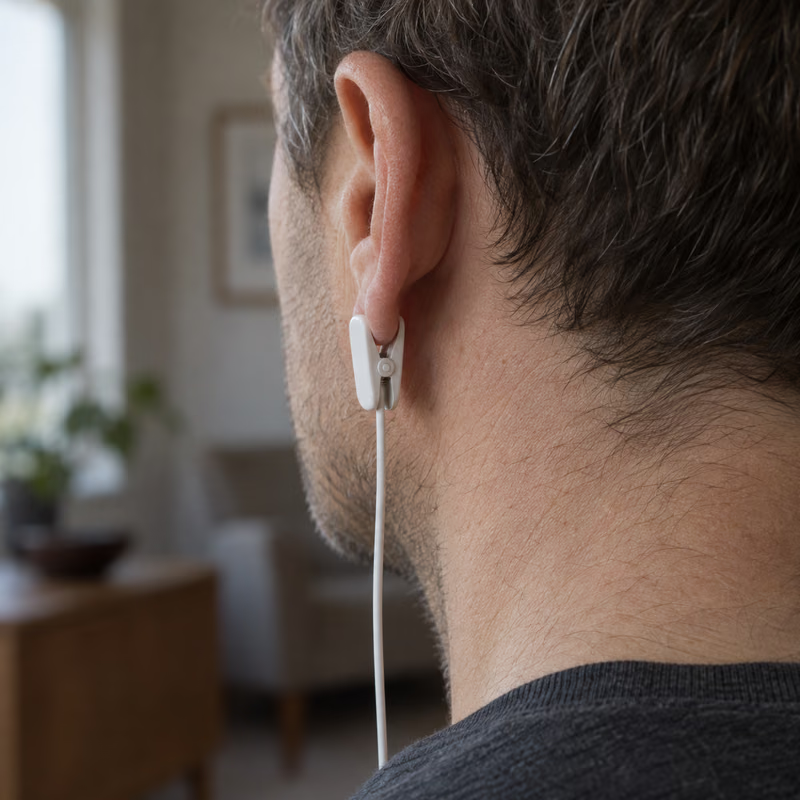
The one I reach for most is the Apollo. It is not an electrical shock and it is not an ear clip. It is a small wearable that gently vibrates and tunes your vagus nerve toward calm, a soft signal your nervous system reads as safety, the same way a hand on your back or a hug lands as safety. And here is what I love about it. It works your vagus nerve for you all day, quietly, in the background, without spending a single drop of your willpower or your energy. The breath and the shaking ask something of you. This one just runs, and works on you while you live your life. It has also been put through real trials. In a double-blind, placebo-controlled study out of the University of Pittsburgh, the vibrations people rated as most calming raised their high frequency heart rate variability, the exact parasympathetic marker this whole post is about. A separate randomized controlled trial in medical and pharmacy students found that twelve weeks of wearing it lowered burnout and lifted well-being against a control group. I keep mine on Unwind when my thoughts are racing and on Sleep at night.
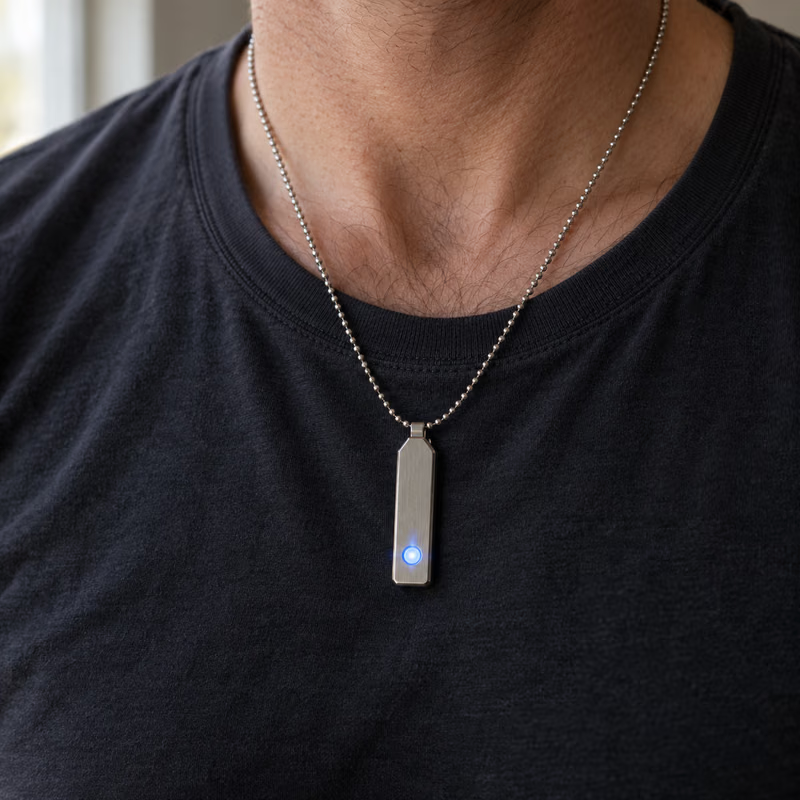
The other family I wear is from Resona. These work on a different principle, pulsed electromagnetic fields and specific frequencies, the same broad method that has been studied for decades and was cleared by the FDA long ago for healing bone. The VaguVibe is a small pendant I keep over my chest, right over the cluster of vagus fibers by the heart, running one continuous gentle mode all day. Like the Apollo, it works on you the whole time you have it on, no effort and nothing to remember, and Resona has run its own studies on these devices too. I wear mine every day because of how steady my own system feels with it running.
And I do not say any of this lightly. I used to have panic attacks, the real, breath-stealing kind. The Apollo and the VaguVibe were a genuine part of how I got free of them, holding my nervous system steady in the background while I did the deeper work, on the days I could not steady it myself. That is why they are on this list. Not as gadgets. As tools that helped me get my life back.
So here is where I land. These are not magic, and I will never tell you a device replaces the breath you can do for free tonight. But the good ones are not placebos either. They are real tools with real signal behind them, and that is exactly why they sit at the top of the ladder, the thing you add once the free practices are a habit, not the thing you start with.
One honest boundary
These tools support a nervous system stuck on high alert, and they pair beautifully with professional care. For anxiety that is persistent, or that comes with panic or thoughts of self harm, that care comes first, so work with a licensed professional. If you are in crisis in the US, call or text 988 for the Suicide and Crisis Lifeline. Everything here belongs alongside that, never instead of it.
So here is the ladder, from free tonight to worth the gear
You do not have to do all of it, and you should not start at the top of the price list. Start at the bottom of it.
- Tonight, for nothing: one long exhale, in for four, out for six, for two minutes. Then one low hum on the out breath.
- This week, for nothing: cold water on the face when a spike hits, and a full body shake-out when the day leaves you wired.
- Most days, for nothing: a slow walk or a few minutes of gentle movement, and a gargle at the sink when you brush your teeth.
- When you want to add real tools: a wearable with actual studies behind it, like the Apollo I wear on Unwind and Sleep, layered on top of the free practices you already have.
None of this has to happen this week. But you can do the first rung in the next two minutes, sitting exactly where you are.
The deeper cut
If you want the full four-tool starter kit for an overactive system, breath, movement, meditation, and the layer underneath, read how to calm an anxious nervous system naturally, which is the plain-language on-ramp this post sits beneath. This one is the mechanism cut, that one is where to begin.
And sometimes you do all of it, the breath and the hum and the cold water, and a low hum of anxiety still stays. That usually means the charge is sitting at a deeper layer than these tools reach, an old fear or imprint the body is still holding. That is the work behind The Anxiety Upgrade, which pairs these science-backed nervous system tools with energetic practices to settle an anxious system at both layers at once.
Your body is not broken. It is blocked, and for a nervous system stuck on high alert, the block is often nothing more complicated than a brake it forgot how to reach. You were born knowing how. It is one long breath, one low hum, away.
Your calm has been in your own throat this whole time.