I will give you the honest version, because the candida conversation almost never gets it. Most of what you read online is either a fear pitch for a thirty day cleanse or a flat denial that candida matters at all. The truth lives between them, and it is more useful than either.
Candida is a yeast that lives in almost every human gut. It is supposed to be there. The question is never whether you have candida. The question is whether your gut is in shape to keep it in check, or whether you have let the conditions tip in its favor.
First, the part most people get wrong
Candida overgrowth is real. Candida is a yeast that lives in almost everyone, and when the gut's ecosystem tips out of balance, it can bloom and drive fatigue, brain fog, bloating, cravings, and that generally run-down feeling. Conventional medicine tends to only name candida once it becomes a full invasive infection, and misses the everyday overgrowth entirely, which is exactly why so many people are handed a normal result and a shrug while they clearly do not feel right.
So here is the move that actually works. Support the gut, bring in a good functional medicine doctor to help you find what tipped it, and let a stronger gut sort the yeast out the way it is designed to. The same food strategy that fights candida is, underneath, just the strategy for a healthier microbiome. That is why it works.
Why the gut is the real lever
Your gut keeps yeast in check through what scientists call colonization resistance. A crowded, diverse community of bacteria competes with candida for space and food, and your immune system and gut lining hold the line. A review on candida colonization resistance describes this as a balancing act between the host and the microbiome. When that balance is intact, yeast stays a quiet tenant. When antibiotics, a poor diet, or chronic stress thin out the bacteria, candida has more room to spread.
So the goal is not to wage war on yeast. The goal is to rebuild the community that keeps it small.
Why a leaky gut becomes an autoimmune problem
Here is the part that raises the stakes far beyond bloating. Candida does not just sit quietly in your gut. It damages the lining directly, and that lining is the wall between your digestion and your bloodstream. When it breaks down, what most people call a leaky gut, partly digested food proteins slip through into your blood where they were never meant to be.
Food proteins are not the only thing crossing. Bacterial endotoxin, LPS, comes through the same broken wall, and unlike a food protein it inflames you everywhere it lands. It has now been measured in the blood of people with twenty one different conditions, and the whole chain fits in one chart you can open right here.
Your immune system meets those loose proteins, does not recognize them, and attacks them as invaders. That part is correct. The problem is that some food proteins look almost identical to the proteins that build your own organs and glands, your thyroid, your joints, your nerves. Immunologists call it molecular mimicry. Your immune system, now trained to attack that shape, cannot tell the difference and starts attacking your own matching tissue by mistake. Dr Alessio Fasano, who discovered the protein that controls gut leakiness, laid out how a leaky gut drives autoimmune disease, and other research has shown how antibodies to common foods cross react with human tissue.
And it feeds itself. As long as you keep eating that trigger food across a leaky barrier, you keep retraining the immune system to attack, and it keeps hitting both the food and your own tissue that resembles it. The cycle never closes on its own. This is why rebuilding the gut is not only about comfort. Sealing that barrier and pulling out the trigger foods is how you stop feeding an autoimmune fire.
Step one: starve what feeds it
Sugar and refined carbohydrate are the clearest fuel source for yeast. Animal studies show a high sugar diet increases candida in the gut, and sugars affect how yeast sticks to the gut wall. Human results are more mixed, because your bacteria and immune system also keep candida down, but the direction is clear enough to act on.
What this looks like in practice:
- Cut added sugar and sweetened drinks first. This is the single highest leverage change.
- Pull back on refined flour, white bread, and anything that turns to sugar fast.
- Go easy on alcohol while you rebuild, since it is sugar and a gut irritant in one.
Starving works, but it is only half the job. Cutting sugar removes the fuel. It does not rebuild anything. People who only restrict end up with a quieter gut and a fragile one.
Step two: rebuild what competes with it
This is the half almost everyone skips, and it is the half that lasts. You rebuild by feeding the bacteria that crowd yeast out.
The good news is that the gut responds fast. A landmark Nature study found that diet rapidly and reproducibly alters the human gut microbiome within a single day of changing what you eat. You are not stuck with the gut you have. You are feeding a new one at every meal.
The strongest single tool is fermented food. A Stanford trial published in Cell on gut microbiota targeted diets found that a diet high in fermented foods raised microbiome diversity and lowered inflammatory markers, while a high fiber diet alone did not move inflammation in the same way. Diversity is the goal, because a crowded, varied gut leaves less room for any one organism to dominate.
What this looks like in practice:
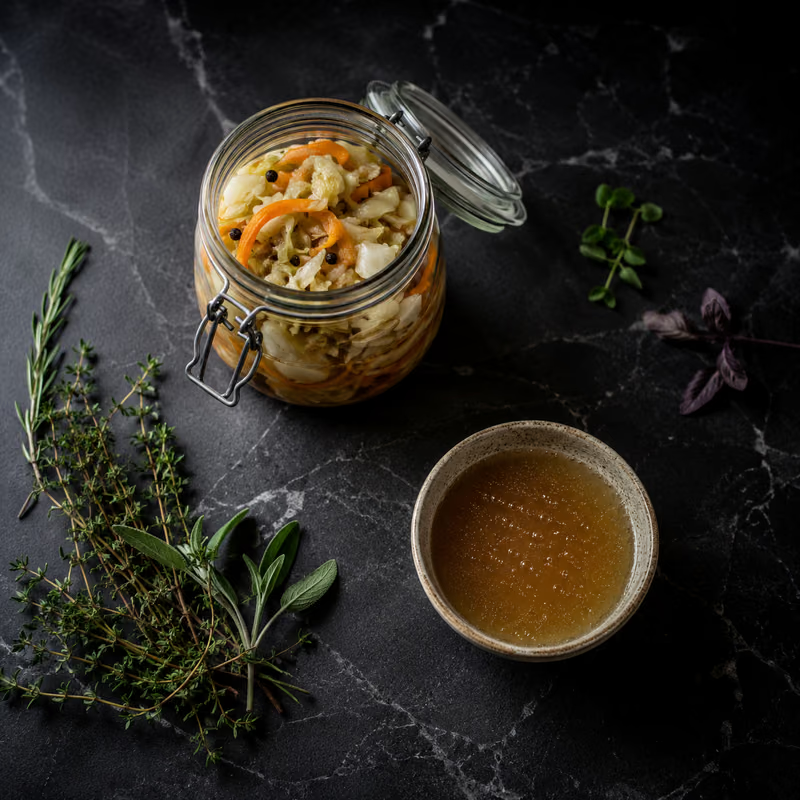
- Add a fermented food daily. Plain yogurt, kefir, kimchi, sauerkraut, miso, kombucha. Rotate them.
- Eat a wide range of plants and fiber. Variety feeds variety.
- Be patient. The surface shifts in days, but a stable, resilient gut is built over weeks and months.
Putting it together without the fear
You do not need a thirty day starvation cleanse. You need to stop feeding the yeast its favorite fuel and start feeding the bacteria that keep it small, then hold that pattern long enough for the gut to rebuild. Starve, then rebuild. Both halves, every day.
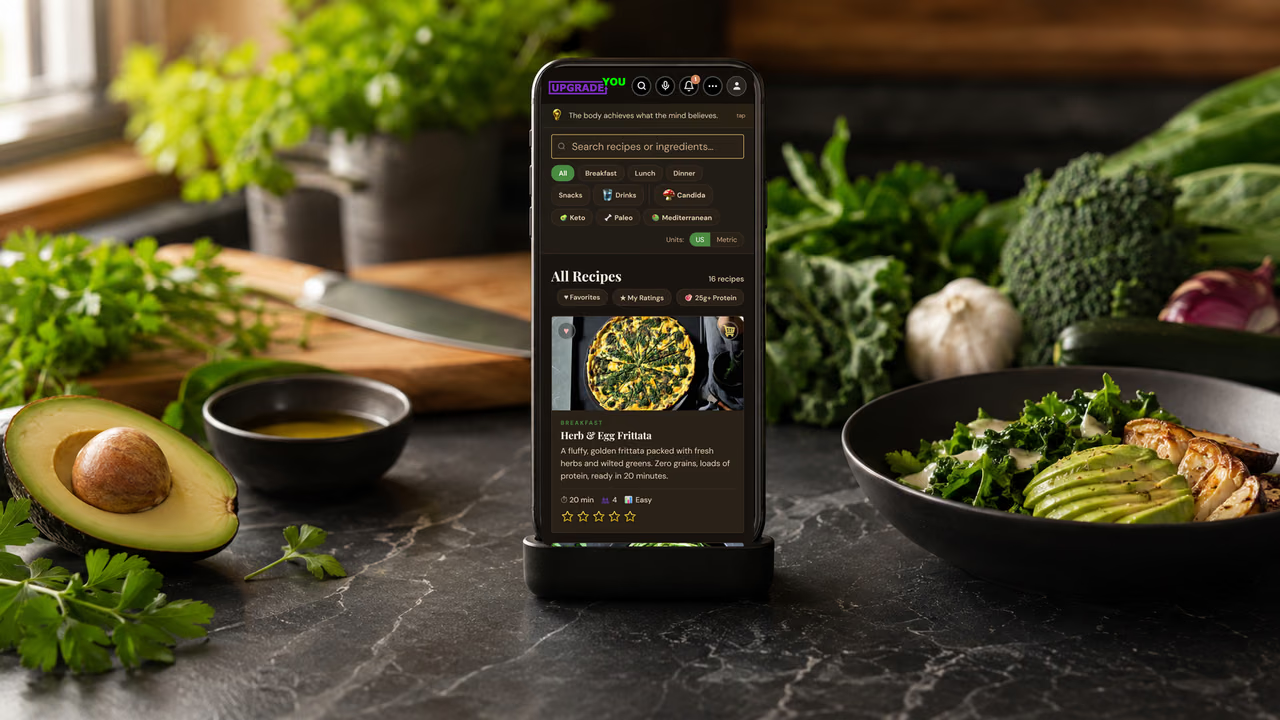
This is exactly the approach behind Anti-Candida Kitchen app, where the recipes are tagged by phase so you can starve the overgrowth first and then widen back out into a diverse, resilient way of eating without losing the progress.
One warning before you start, because it is the part that makes people quit. When you actually begin killing off an overgrowth, a lot of people feel worse for a stretch before they feel better. Headache, fog, achy, wrung out. That is die-off, it is real, and it is not a sign you are doing damage. It usually means you are killing faster than your body can carry the debris out. Read what candida die-off actually is and how to move it through before you start, so you know what you are looking at and you do not mistake it for failure. And when you are ready to build the plate, the candida diet food list shows you what actually goes on it.
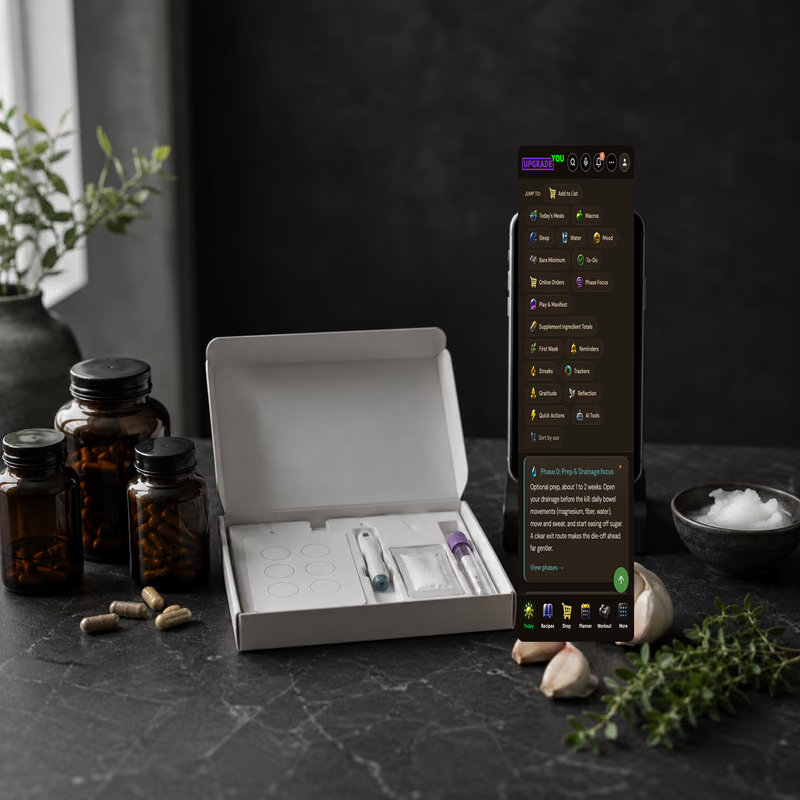
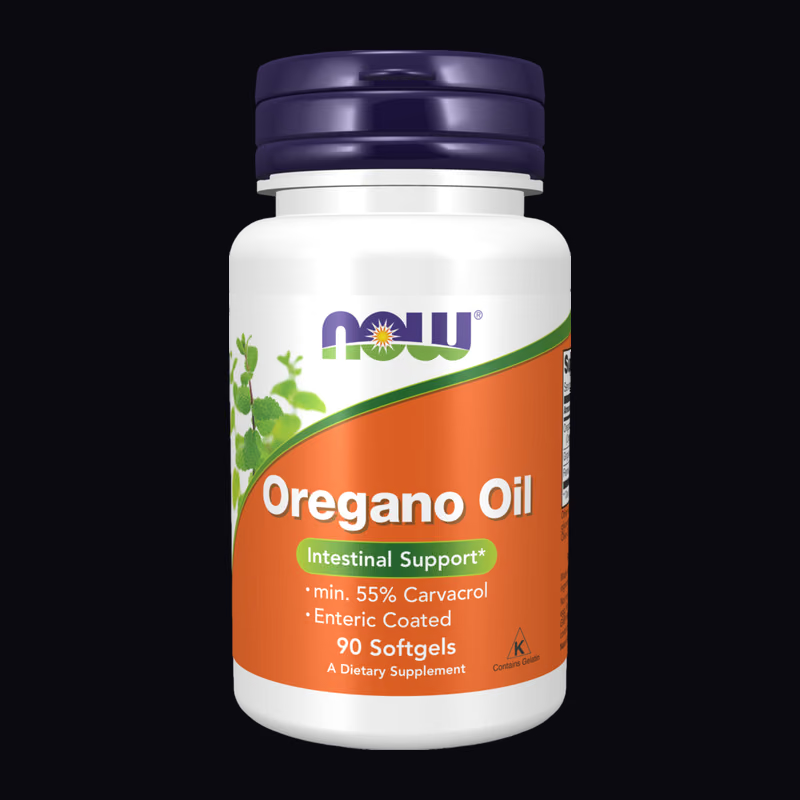
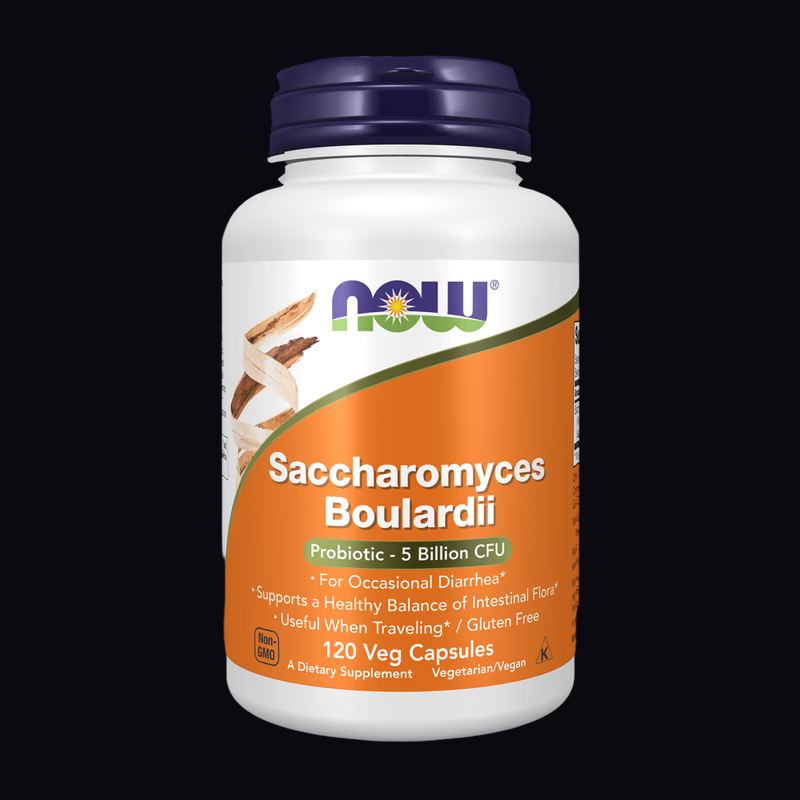
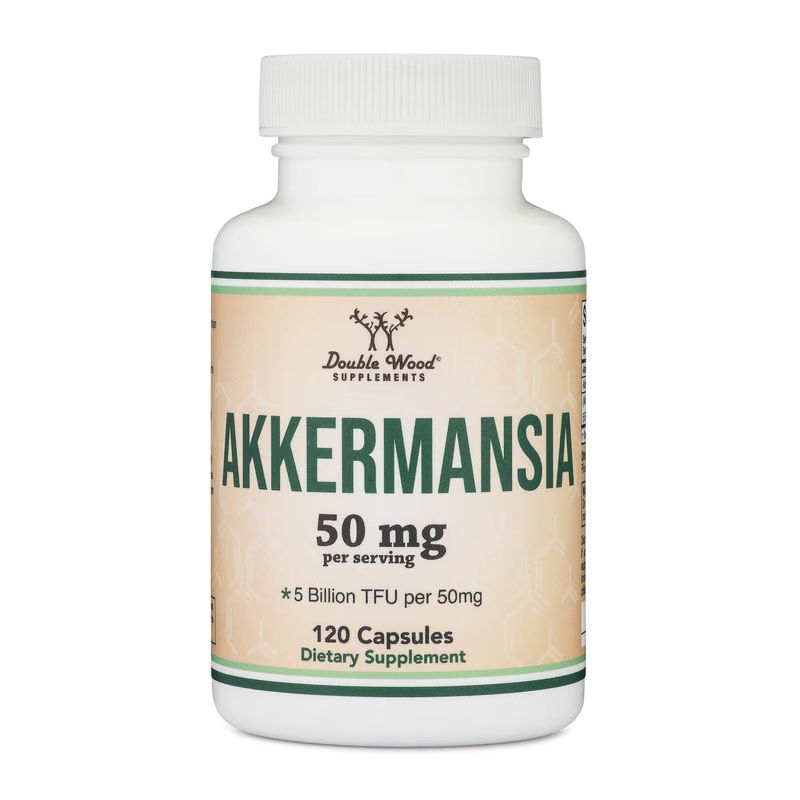
I run the supplement side in the same four phases, and I have grouped my own stack that way so you are not guessing what belongs where: Phase 0, Prep and Drainage opens your exits before you kill anything, Phase 1, Starve and Kill is the antifungal and biofilm work, Phase 2, Rebuild the Gut is where the lining actually gets sealed back up, and Phase 3, Reintroduce and Hold is the part most people skip and then wonder why it came back. Starve, then rebuild, in that order.
Before you change a thing, test
Here is the move most people skip. If you think candida is your problem, do not start cutting foods on a hunch. Confirm it, and find your own triggers. The KBMO FIT 176 Gut Barrier Panel is the one I point people to first, because it does two jobs at once. It maps how your body reacts across 176 foods, so you can pull the ones that are quietly inflaming your gut, and it reads the gut barrier itself, so you can see whether the wall is actually leaking. That is your starting map. Always test, do not guess, then rebuild with a plan that fits what is really going on.
If your candida will not go down, look up
And here is the piece almost nobody checks. If you do the gut work, hold the diet, and the candida still will not go down, look in your mouth. Your oral microbiome is the front door to your whole digestive tract, and it can quietly re-seed the very problem you keep trying to clear below. In particular, the aggressive gum-disease bacteria known as the red complex, led by Porphyromonas gingivalis, team up with candida. The yeast throws up a scaffold, the bacteria move in, and together they build a protected biofilm that shrugs off your immune system and your antifungals, which lets the candida dig in, resist treatment, and keep coming back no matter what you do below. So if your mouth is a reservoir for these bugs, the gut work alone keeps losing. An oral microbiome test tells you whether that is what is holding you back.
If your symptoms persist or worsen, see a good functional medicine doctor, especially if you are pregnant, immunocompromised, or managing a chronic condition. But for a gut that has tipped out of balance, food is the first and most powerful lever you have.
Your body is not fighting yeast. It is waiting for you to rebuild the garden that keeps it in its place.