A few days into the anti-candida diet you feel like you got hit by a truck. Headache, foggy, wrung out, short with everyone, achy, like you are coming down with something. You did everything right, and somehow you feel worse than when you started.
Breathe. You are not going backward. You are feeling die-off, and it is real, and there is a reason it is hitting you this hard that almost nobody explains properly.
The quick honest answer
When you starve and kill a candida overgrowth, the yeast does not just quietly vanish. As it dies, it releases the toxins it was carrying and producing, and your immune system reacts to the mess. That reaction is die-off, the same thing practitioners call a Herxheimer reaction, and the worse-before-better wave it creates is a known pattern, not a mystery.
Here is the part the internet keeps getting wrong. How hard die-off hits you is not really about how much yeast is dying. It is about whether your body can carry the released toxins out fast enough. When your drainage pathways are backed up, and for most people at least one of them is, those toxins have nowhere to go, so they recirculate and you feel poisoned. Feeling terrible is not proof the diet is working harder. It is usually a sign you are killing faster than you can clear.
So the real move is not to push through the misery like a badge of honor. It is to open the exits so the toxins can leave, and to pace the kill to what your body can actually carry out.
What die-off actually is
Die-off is usually pinned to a real medical name, the Herxheimer reaction, or Jarisch-Herxheimer, and that name is not marketing. It describes a documented event. A review in the American Journal of Tropical Medicine and Hygiene describes it as a flare of fever, chills, and worsening symptoms that hits when a large load of microbes is killed off quickly, driven by the immune system reacting to what the dying organisms release, with pro-inflammatory signals like TNF and interleukins doing the work. It was first mapped out with spirochete infections, and functional practitioners see the very same pattern when you go hard at a candida overgrowth.
And candida gives your immune system plenty to react to. Candida albicans produces gliotoxin, an immune-suppressing toxin, shown in research in Thrombosis and Haemostasis to interfere with human cells. It also churns out acetaldehyde, the same toxic compound behind a hangover, through the alcohol-processing enzymes described in work in Molecular Oral Microbiology. Day to day, a healthy body clears a trickle of this. Kill a big colony at once and that trickle becomes a flood, all at the same time. The flood is what you feel.
Why it hits so hard: your drainage pathways are backed up
This is the piece the debunking articles miss completely, and it is the whole game.
Every toxin released when candida die has to physically leave your body. It does not evaporate. In functional medicine we talk about the drainage pathways, the actual exits toxins travel through, and they run in an order. Your bowels carry the bulk of it out. Your liver and bile break down and package the fat-soluble load and dump it into the gut to leave. Your kidneys flush the water-soluble part. Your lymph is the drainage system that moves waste out of your tissues toward those exits. Your skin sweats some of it out.
Now picture that funnel when the bottom is clogged. If you are constipated, the toxins your liver dumped into your gut get reabsorbed instead of leaving. If your bile is thick and sluggish, the fat-soluble load never gets carried out in the first place. If you are dehydrated, your kidneys and lymph both slow down. So you kill a wave of candida, the toxins pour out, and they hit a backed-up drain and wash right back into circulation. That is the person who feels flattened by die-off.
The person who barely notices die-off is almost always the one whose exits are open. Same kill, completely different experience, and the difference is drainage. This is why the answer to brutal die-off is almost never push harder. It is open the exits first.
How to move it through
Here is the order that actually works, from the free things you do today up to the extras. Open the drainage before and while you kill, not after.
- Keep your bowels moving, every single day. This is the number one exit, and a stalled bowel turns die-off miserable. Fiber from vegetables, plenty of water, magnesium in the evening, and movement all help. If you are not going daily, slow the kill until you are.
- Hydrate with intention. Water is what your kidneys and your lymph run on. Steady water through the day, and a pinch of quality salt or minerals so it actually hydrates you, keeps the flush moving.
- Support bile and the liver. Bitter greens, beets, a squeeze of lemon, and gentle bile support keep the fat-soluble toxins moving out instead of pooling. A bile acid like TUDCA is what I keep on hand for this around heavier stretches.
- Move your lymph. Lymph has no pump but you. A daily walk, a few minutes on a rebounder, dry brushing before a shower, or a sweat in a sauna all push tissue waste toward the exits.
- Catch the loose toxins with a binder. Away from food and supplements, activated charcoal grabs toxins in the gut so they leave with your stool instead of getting reabsorbed. This is the single tool that takes the edge off a rough die-off day the fastest.
- Pace the kill to your drainage. This is the master rule. Kill candida only as fast as your open pathways can carry the debris out. If die-off is severe, you are not winning faster, you are just backing up the drain. Ease off, keep the exits open, and go again gently.
- Rest and eat gentle, warm food. Soups, broths, and cooked vegetables are easy on a system in transition and keep you fed while you move through it.
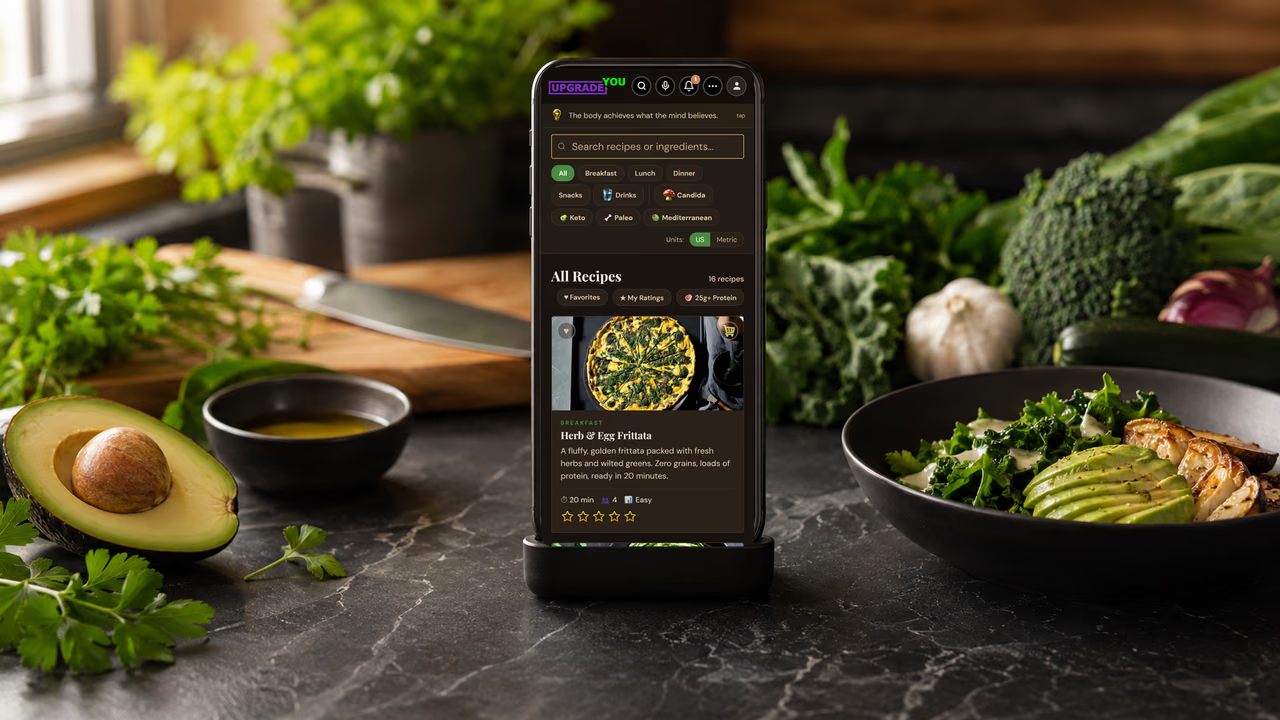
Pacing is the hard part to do by feel, which is exactly why it is built into Anti-Candida Kitchen app. The recipes are tagged by candida phase, so you step deeper only when you are ready instead of shocking your system, the symptom and supplement tracking lets you actually see whether a wave is easing or climbing, and gentle options like its soups and broths are there for exactly these weeks. The guided Candida Protocol pairs that phased pacing with the tracking so the whole kill is timed to stay carryable.
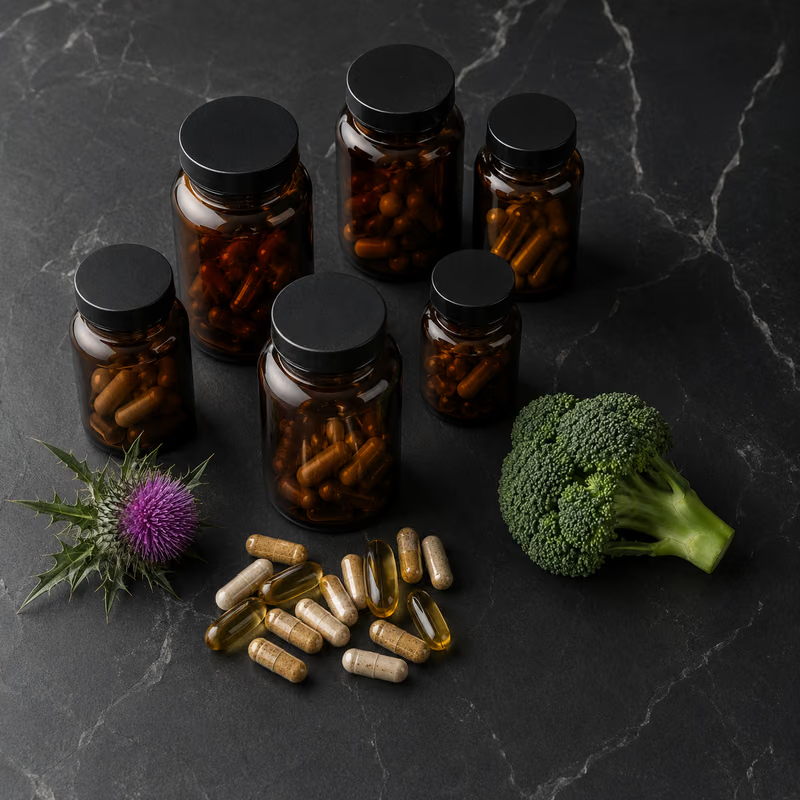
If you want the supplement side of that pacing already sorted, I split my own stack into the same phases the app runs on. Phase 0, Prep and Drainage is the one that matters most for everything in this post, the one to two week lead-in that opens the exits before you kill anything, and it is exactly the phase people skip on their way to a brutal week. Then Phase 1, Starve and Kill, Phase 2, Rebuild the Gut, and Phase 3, Reintroduce and Hold pick up from there. Start at Phase 0. Your die-off will thank you.
The line worth respecting
Die-off should be rough and then easing, not severe and climbing. Some symptoms are not die-off at all, and calling them detox is the mistake that can hurt you. Stop and get medical care now for a high fever, trouble breathing, chest pain, severe abdominal pain, persistent vomiting or diarrhea, signs of dehydration, confusion, fainting, or a spreading rash. And if you are pregnant, immunocompromised, managing a chronic illness, or on medication, work with a good functional medicine doctor before you start an aggressive protocol, so the pace and the support are built around you from the start.
The honest bottom line
Your body is not broken, and it is not being poisoned by its own healing. It is blocked. The misery of die-off is almost always a drainage problem wearing a scary costume, toxins with nowhere to go because the exits are backed up. Open the pathways, catch the loose load with a binder, and kill only as fast as you can carry it out, and the same die-off that flattened you becomes a passing wave you can actually move through.
Feeling worse can be a real part of clearing candida. Getting worse is not, and it is never something to explain away. Learn to tell the two apart, keep your exits open, pace it gently, keep a record, and keep a good functional medicine doctor in the loop for anything severe. That is the whole skill, and it is a lot kinder than the grit-your-teeth version the internet tried to sell you.
Want the deeper why behind the diet itself? Read how to starve candida and rebuild your gut, and when you are ready to build the plate, the candida diet food list shows you what you can actually eat while you keep the whole thing moving.
One more thing worth saying. If you have not actually confirmed candida, do not white-knuckle a protocol on a hunch. A stool test shows what is really living in your gut, so you know you are clearing the right thing and not putting your body through die-off for a problem you never had. The functional lab tests here are built for exactly that. Always test, do not guess.