Most of what gets sold as biohacking is a gadget with a big price tag and a thin pile of evidence. Heat is the opposite. It is cheap, it is ancient, and it is one of the most studied tools in the entire space. I sit in a sauna almost every day, and it is not because it feels good, although it does. It is because the long term data is some of the most convincing I have seen for any single habit.
Let me make the case.
Heat is a stress that makes you stronger
The instinct is to think of comfort as healthy and stress as harmful. The body does not work that way. It adapts to challenge. A small, controlled dose of stress signals it to repair and come back more resilient, and a life with no challenge at all leaves it soft. This is called hormesis, and it is the logic underneath exercise, fasting, cold, and heat.
When you sit in a sauna, your core temperature climbs, your heart rate rises the way it does during moderate exercise, your blood vessels open, and your body produces heat shock proteins that help repair and protect your cells. Then you cool down and the system settles, a little stronger than before. The discomfort is not a side effect. It is the signal.
The long term data is unusually strong
Here is what moved me. In a large, long running Finnish study, researchers followed thousands of middle aged men for two decades. The association between sauna bathing and mortality, published in JAMA Internal Medicine, found that men who used a sauna four to seven times a week had substantially lower rates of fatal heart disease and lower all cause mortality than men who went once a week. The benefit climbed with frequency.
A follow up prospective cohort study in BMC Medicine extended the findings to men and women together and reported reduced cardiovascular mortality with frequent sauna use. And a review of the evidence in Mayo Clinic Proceedings gathered the broader picture across heart health, blood pressure, and other markers.
This is observational data, which means it shows a strong association rather than proving cause on its own. People who sauna often may differ in other ways. But the size, the length, and the dose response pattern, more sessions tracking with more benefit, make it some of the most compelling evidence behind any everyday wellness habit.
Heat is also one of your best detox tools
There is a second reason I sit in the heat, beyond the heart data, and it is the one the infrared crowd is right about. When you sweat, you do not just lose water. Sweat is a genuine exit route for some of what builds up in a modern body. A systematic review in the Journal of Environmental and Public Health found that heavy metals like arsenic, cadmium, lead, and mercury are excreted in sweat, in some cases at higher concentrations than show up in blood or urine. Other studies have caught BPA and phthalates, the plastics chemicals that get into all of us, coming out the same way.
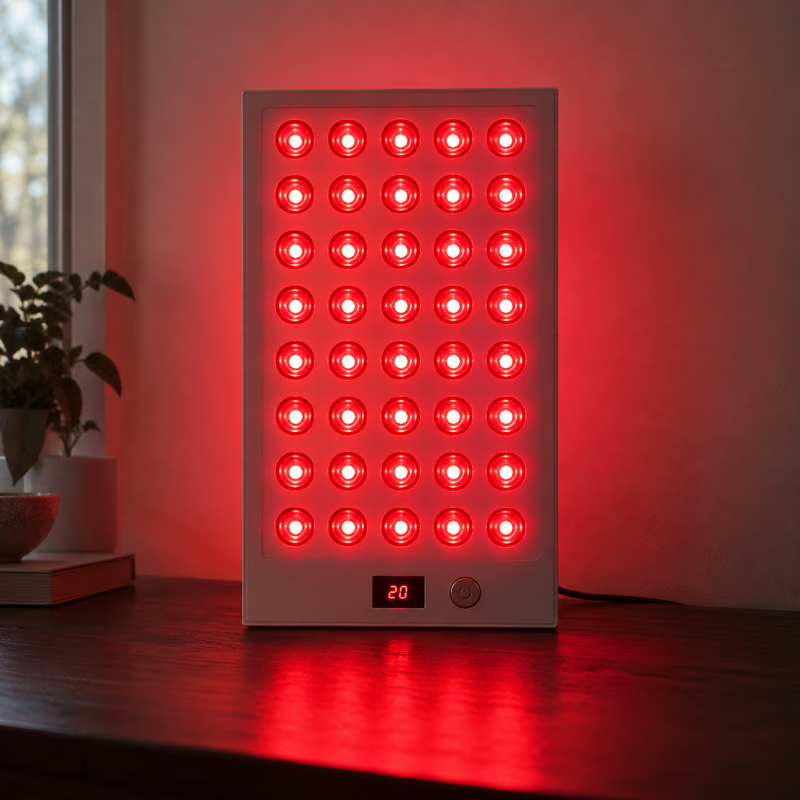
This is where infrared saunas earn their reputation. Instead of blasting the air to brutal temperatures, infrared heat warms your body directly, so you sweat deeply and for longer at a heat you can actually sit in. More sweat, more comfortably, is exactly why so many people reach for infrared when detox is the goal. Let me keep it honest, the way I always will. This supports your body's own clearing, it does not replace the liver and kidneys doing the heavy lifting, and no sweat session flushes everything out of you. But sweating is a real, measured exit, and heat is how you open it.
You do not need heroics, or a fancy setup
Two things people get wrong here. First, they assume you need to bake yourself to be doing it right. You do not. The clearest signal in the research showed up at two to three sessions a week, and the benefit grew from there. Start with two sessions of ten to twenty minutes at a heat you can actually tolerate, and build slowly.
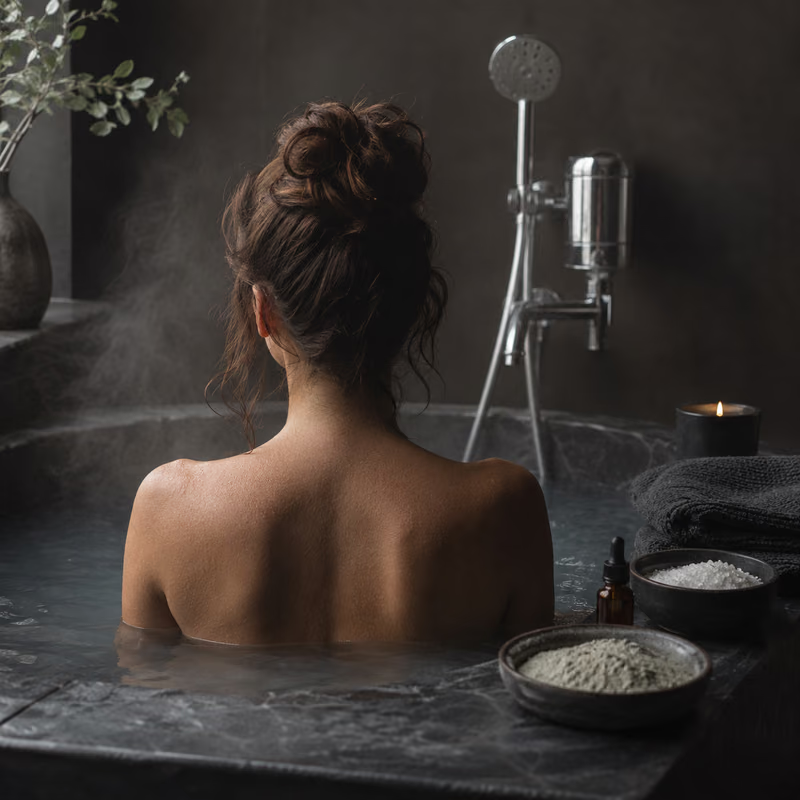
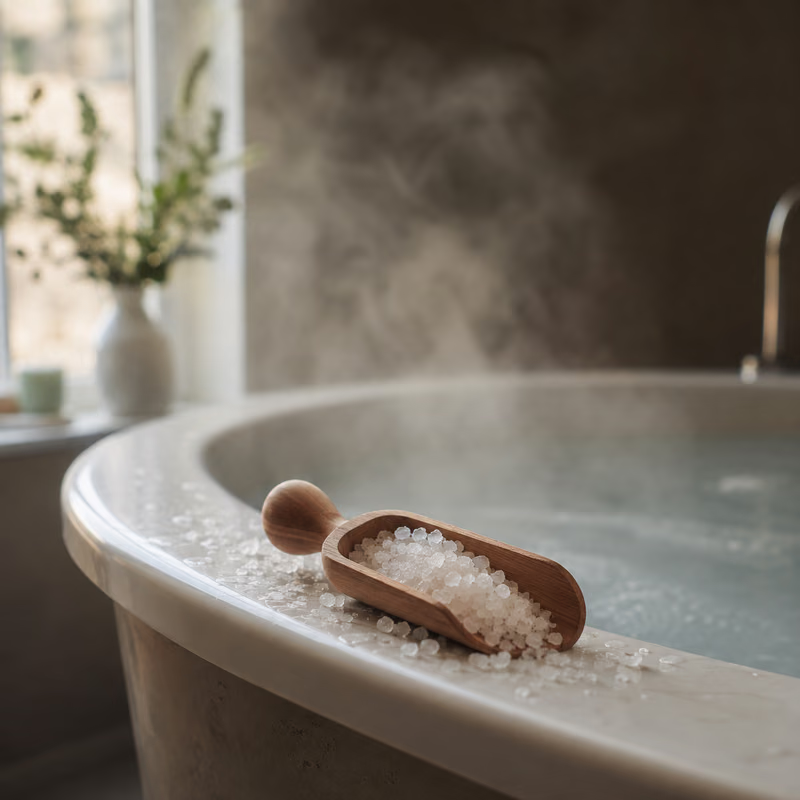
Second, they assume they need a five figure infrared cabin. The studies were done in ordinary Finnish wood saunas. A sauna at your gym, a budget infrared tent, or a hot bath that raises your core temperature will get you moving. My favorite at-home version is a deep, hot soak, and I put together the Deep Soak Bundle for exactly this: a bath and shower filter so you are not soaking in chlorine with your pores wide open, plus Epsom salt, mineral and Dead Sea salts, and bentonite clay to turn an ordinary tub into a hot mineral detox bath. Equipment is the smallest variable in this. The habit is the whole thing.
And here is exactly how I take mine, because the ritual is half of it. I run the water as hot as I can comfortably stand, pour in two full cups of Epsom salt and a whole dropper of lavender essential oil, then kill every light in the room and soak in total, pitch black darkness. The heat pulls the tension out of my muscles, the lavender quiets my mind, and the darkness tells my nervous system there is nothing to watch and nowhere to be.
I also add a cup or two of plain sea salt to almost every bath I take. Sea salt does something none of the others quite do. It grounds me and it lifts me at the same time, heavy and settled through the body, clear and wide awake behind the eyes. It costs a few dollars and it changes the whole character of the water. And I will say the quiet part out loud while I am here, because most people need to hear it: you are allowed to do this for yourself. You do not need a reason, a bad week, or permission. You deserve to treat yourself.
And I rarely stop at the basic version. Some nights I take a handful of Dead Sea salt and scrub it over my whole body before I get in, and it feels absolutely incredible, like sloughing the entire day off my skin. Other nights I coat myself head to toe in bentonite clay and let it draw while I soak. Sometimes I pour in two cups of organic apple cider vinegar, which leaves my skin softer than it has any right to be. And when I want a real lift, when I want my whole energy running high, I add frankincense, and something about that one raises the vibe of the whole bath.
I come out of all of it loose, clean, calm, and ready to sleep like a stone.
Let me tell you how I learned to respect the heat
I earned every one of these cautions the hard way, so please learn them from my bad afternoon instead of your own.
The first time I ever stepped into an infrared sauna, I did the exact thing you are not supposed to do. I cranked it as hot as it would go, sat down at around 160 degrees, and stayed in there for a full hour on my very first try, because in my head more heat and more time simply had to mean more benefit. It did not. I climbed out lightheaded and swimming, the whole room tilting, and I felt like I was on the edge of passing out for hours afterward. One session nearly cost me the entire rest of my day.
Heat is powerful, and powerful means you treat it with respect. Start at a temperature you can actually tolerate, keep it short, and build slowly. The person who does ten easy minutes and comes back tomorrow beats the hero who bakes for an hour once and never wants to see a sauna again.
The honest cautions
Heat is a real load on the cardiovascular system, which is exactly why it helps, and also why it is not for everyone without checking first. If you have a heart condition, low blood pressure, a tendency to faint, or you are pregnant, talk to a good functional medicine doctor before you start. Never use a sauna after drinking alcohol. Hydrate well, and get out the moment you feel lightheaded.
Then get up slowly. This is the one that catches people. Heat opens your blood vessels wide, so standing up fast out of a hot bench or a hot tub is exactly how someone ends up sitting on the floor wondering what happened. Sit on the edge for a few breaths first and let your body catch up with you. And if you do come out a little dizzy or swimmy, run cold water over your face and the back of your head until it passes. I do that after every single bath, not because anything went wrong, but because it is the fastest way I know to bring the whole system back down and walk out steady.
Watch your heart, do not guess at it
Here is the part almost nobody does, and it is the difference between a habit that builds you and a habit that quietly drains you. Your heart rate climbs in the sauna the way it does during moderate exercise. That is the whole point. But a stress only pays you back if you recover from it, and recovery is not something you can feel accurately. It is something you measure.
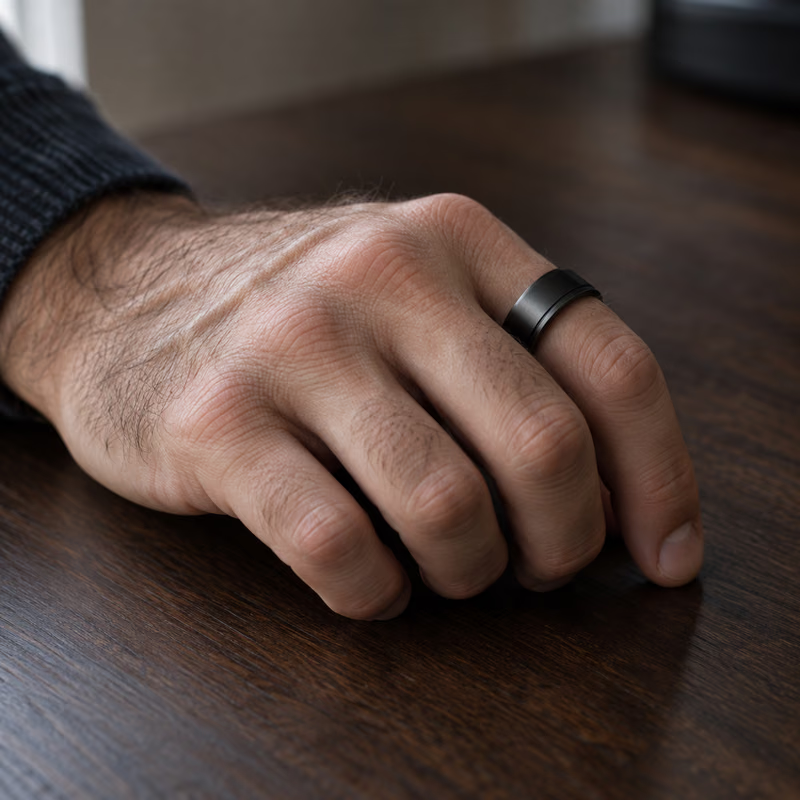
I wear an Oura Ring 5 for exactly this, and the two numbers I actually watch are my resting heart rate overnight and my heart rate variability, which is the beat to beat spacing that tells you which branch of your nervous system is running the show. Researchers at the National University of Singapore put the ring head to head with a hospital ECG across overnight recordings and found strong agreement for both nighttime heart rate and HRV when the numbers are averaged over half an hour or the whole night. That is the window that matters here, because the night after a session is when your body tells you the truth about the session.
Here is how to read it, and it is simple. A session that fits you shows up as a resting heart rate that settles back down overnight and an HRV that holds or climbs. A session that was too hot, too long, or stacked on top of a hard week shows up the other way, resting heart rate elevated in the night and HRV in the floor, and that is your body saying you spent more than you had. That is not a reason to quit. It is a reason to go shorter and cooler tomorrow and let the next one land on a rested system. The ring is a nighttime instrument, not something to stare at while you sit in the heat, so put it on, forget it, and read the morning.
I will be honest about what this is and is not. A ring is not a medical device and it will not catch a cardiac problem for you, so it is no substitute for a good functional medicine doctor if something feels wrong. What it does do is hand you your own data instead of your own guessing, and once you have watched your own numbers rise and fall around your own sessions, you will never dose heat blind again.
This is a complement to a healthy life, not a cure for anything and not a replacement for medical care.
Why I keep coming back
Beyond the data, there is something the studies do not measure. The sauna is one of the few places left with no screen, no task, and nothing to do but sit in the heat and breathe. It is enforced stillness. The body adapts and the mind goes quiet at the same time, which is a rare two for one in a noisy life.
Heat is one of the oldest tools we have, and one of the best returns on effort in all of wellness. You do not need to buy anything to start. You just need to sit in it, regularly, and let your body do what it has always known how to do.