Picture a tablespoon of butter, or just hold one in your hand if you have it. That is about 120 calories of pure fat, and some very confident voices online are telling you to eat as much of it as you possibly can. Pile it in your coffee, drown your steak in it, more is better, fat is free.
I want to slow that down, because I have watched where it goes. Not in a study, in real people I have worked with. And the short version is this. The goal was never maximum fat. It was always enough fat, of the right kind. Those are two completely different diets, and the gap between them is where a lot of people quietly get hurt.
First, let me give the fat crowd their due
I am not here to make you afraid of fat. For decades the official advice was backwards, and the biohackers were right to push against it.
The old story said saturated fat single handedly clogs your arteries, so eat dry chicken breast and margarine and be grateful. That was too simple, and the thing it distracted you from, mountains of refined sugar and flour, did enormous damage while everyone was busy fearing egg yolks. When a huge study called PURE followed people across eighteen countries, it found that high refined carbohydrate intake tracked with worse outcomes, and that fat was not the villain it had been made out to be. That finding is real, and the people waving it around are not making it up.
So yes. Stop fearing whole food fat. Egg yolks are not trying to kill you. The low fat era was a mistake. I will say all of that plainly.
Here is the tension though.
They are watching your heart and ignoring your brain
The high fat gospel leans on one move. Point at heart attack numbers, show they do not spike the way everyone predicted, and declare fat safe. And it is a magic trick, because it asks you to look at one organ and forget the rest of your body has arteries too.
Here is the fact that should get your attention. The single most robust finding in all of this, backed not by one wobbly survey but by genetics and clinical trials together, is that LDL cholesterol causes atherosclerotic cardiovascular disease. A consensus statement from the European Atherosclerosis Society laid the evidence out and it is about as settled as nutrition science gets. And for a lot of people, eating maximum saturated fat drives LDL up, sometimes dramatically.
Now follow where that plaque forms. Atherosclerotic disease is not just heart attacks. The most common kind of stroke, ischemic stroke, is the exact same process, plaque and clot, happening in the arteries that feed your brain instead of your heart. So when someone shows you their heart attack risk went down and calls it a win, ask them the question they are skating past. What happened to their brain. The plaque does not care which artery it is sitting in.
That is the piece the loudest voices leave out. Not because they are lying, but because they are only counting the outcome that flatters the diet.
Type matters more than amount
Here is where it gets practical, and hopeful. The fight over how much fat misses the more important question, which is what kind.
When researchers actually ran the trials and swapped saturated fat for unsaturated fat, heart disease went down. A meta-analysis of randomized controlled trials in PLoS Medicine found that replacing some saturated fat with unsaturated fat lowered coronary heart disease. And the best evidence for a way of eating comes from the Mediterranean pattern. In a major trial published in the New England Journal of Medicine, people who ate a Mediterranean diet rich in extra virgin olive oil or nuts had fewer cardiovascular events than those told simply to cut fat. That is not a low fat diet. It is a smart fat diet.
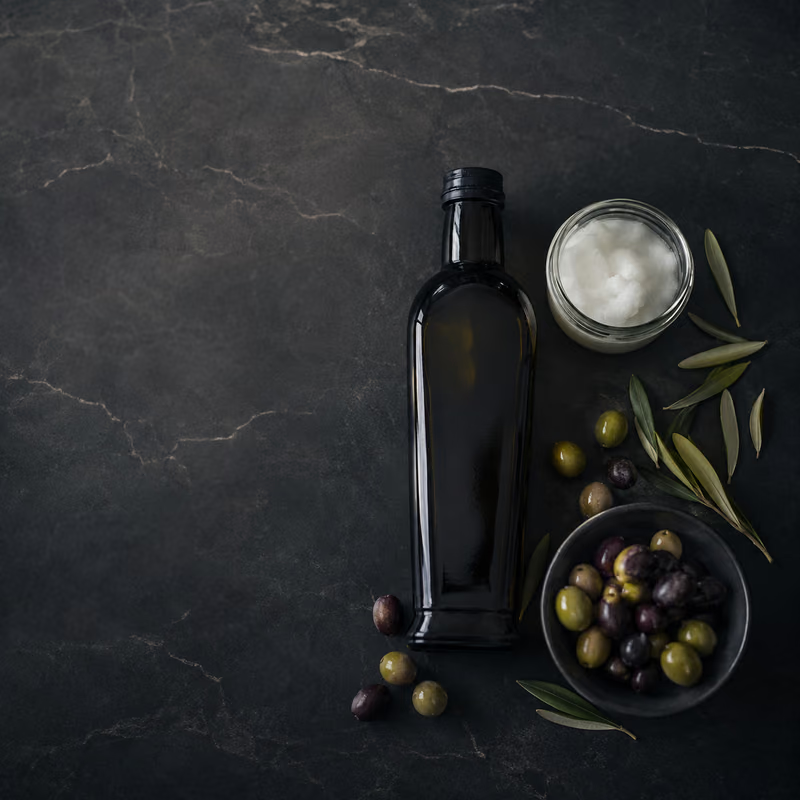
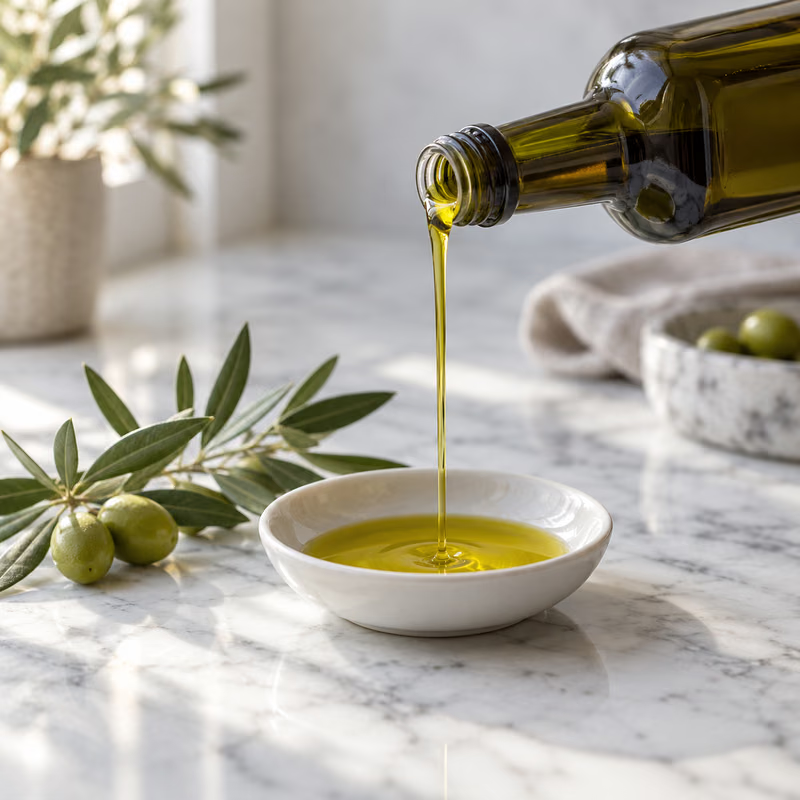
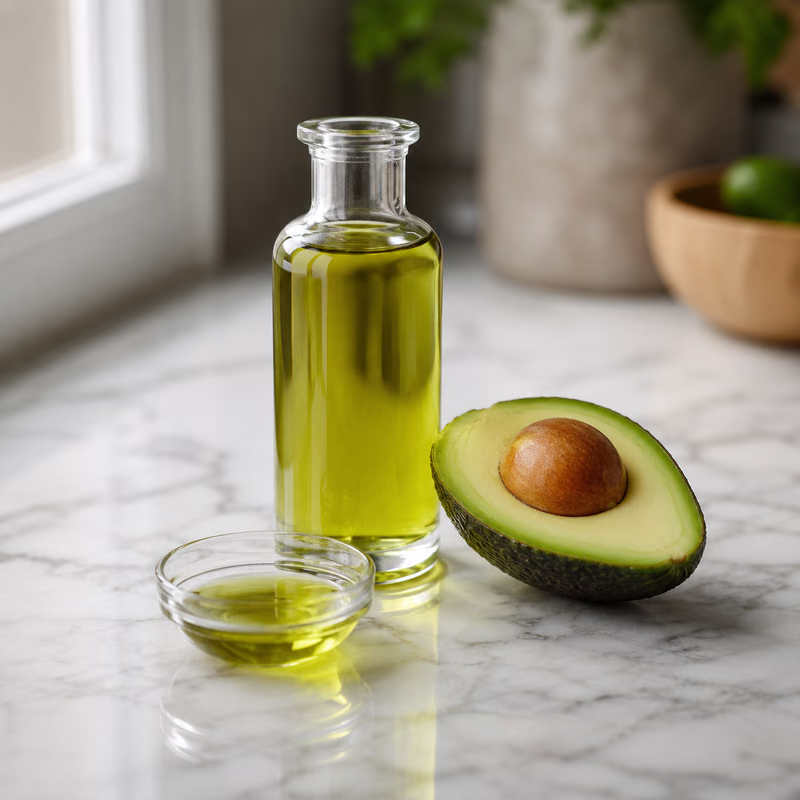
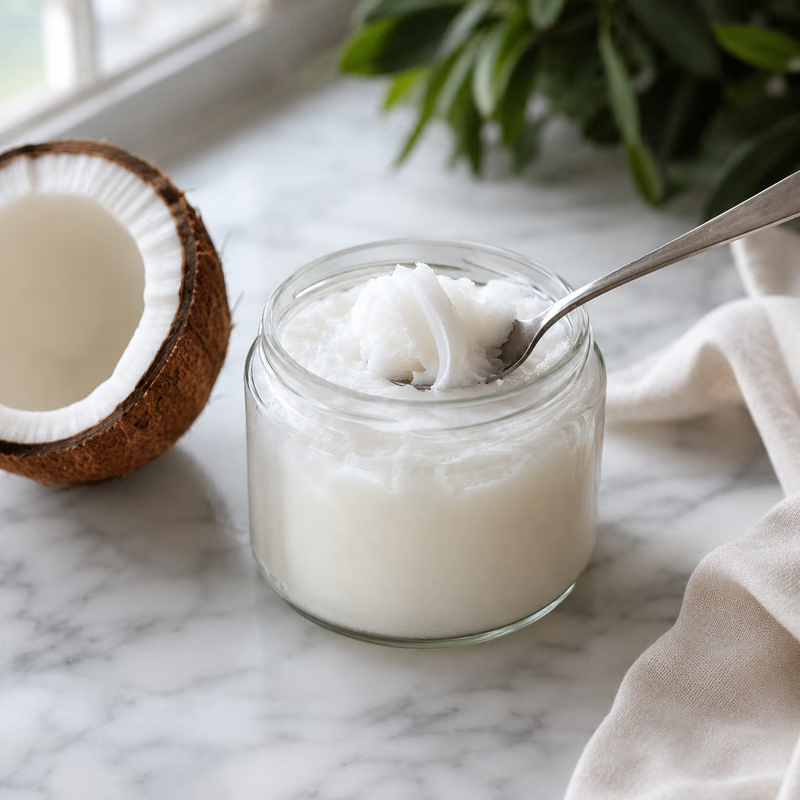
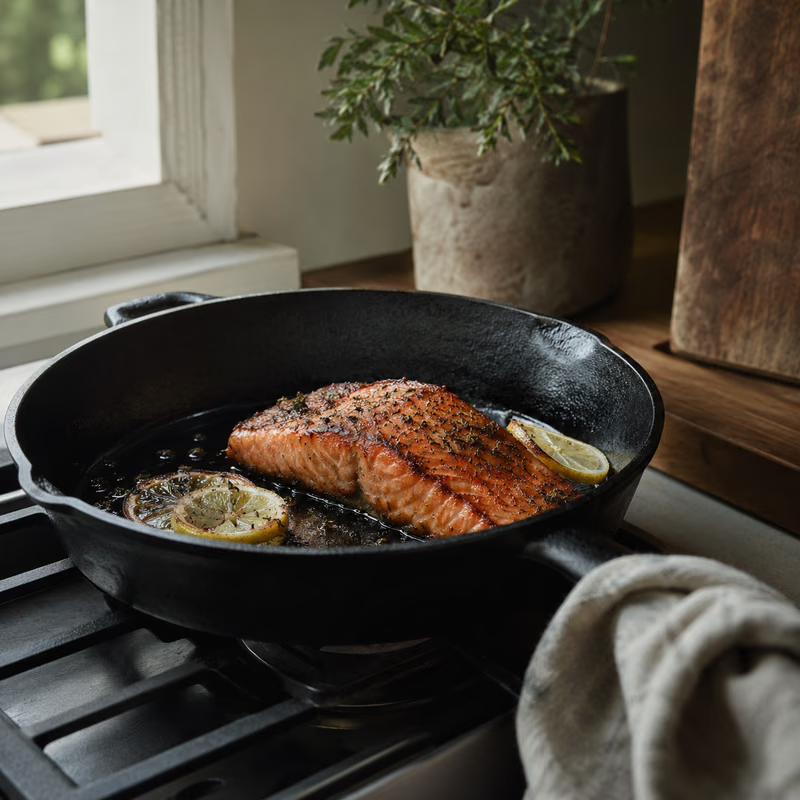
So let me be specific about what I mean by healthy fat, because this matters. I mean whole food fats. Extra virgin olive oil, avocado, wild fatty fish for omega-3s, nuts and seeds, and modest amounts of pasture raised animal fat. I do not mean industrial seed oils, the soybean, corn, and canola oils refined into everything on the shelf. Swapping butter for a stick of processed seed oil is not the upgrade it gets sold as. The move is toward real food fats, not toward a different factory product. Sold to you does not mean good for you.
And now the part almost nobody warns you about, your gallbladder
This is the one I have seen up close, and it is why I wanted to write this at all.
Your gallbladder is a small sac that stores bile, the fluid your body uses to break fat apart so you can absorb it. When you send it a normal amount of fat, it squeezes, releases bile, and does its job. When you suddenly flood the system with far more fat than it is used to, especially if your bile was already sluggish, you can overwhelm it.
And the chemistry backs up the worry. What you eat directly shapes how likely your bile is to form stones. A review in Current Medicinal Chemistry lays out how diet drives cholesterol gallstone formation, and other work in F1000Research describes how bile that gets oversaturated with cholesterol is exactly how those stones begin. Load the body with cholesterol and fat faster than the system is built for, and you tilt bile toward crystallizing.
There is a second trap hiding inside the first. A sudden high fat or keto switch often causes fast weight loss, and rapid weight loss is one of the best known triggers for gallstones there is. So the very thing people are celebrating, the pounds falling off, is quietly stacking the deck against their gallbladder at the same time.
I am not a doctor and I am not diagnosing anyone. But I have watched people go all in on maximum fat and end up with a clogged, angry gallbladder, sometimes losing the organ entirely. I am not saying that is you. I am saying it is a variable, a real one, and it is one the fat influencers almost never mention. And if you ever get severe pain in the upper right side of your belly, with fever or vomiting, do not tough it out or wait, that can be a gallbladder emergency and it needs urgent care.
You still need enough, so do not swing the other way
Here is where I catch you, because I am not sending you back to the fat free nightmare of 1995.
You need fat. Real, generous, daily fat. Your brain is largely built of it. Your hormones are made from it. Vitamins A, D, E, and K are fat soluble, which means without fat in the meal you barely absorb them. And your gallbladder actually needs regular fat to keep emptying, so going too low backfires there too and lets bile sit and stagnate. Both extremes hurt you. That is the whole point.
So the target is not high, and it is not low. It is enough. Enough good fat to run your brain, build your hormones, absorb your vitamins, and feel satisfied so you are not white knuckling hunger all day. Past that point, more fat is not a superpower. It is just more.
Here is the honest hedge
I will always tell you where my certainty ends. Nutrition is deeply individual, and how your body handles fat depends on your genetics, your metabolism, and your gut. Some people can eat more saturated fat and barely move their numbers. Others are hyper responders whose LDL rockets on the same food. That is exactly why maximum is the wrong target for everyone, because there is no one dose that fits every body.
So do not guess. If you are eating a lot of fat, get your LDL, and ideally your ApoB, actually measured, and do it with a good functional medicine doctor who reads the whole picture instead of one number. Test, do not assume you are the exception.
So here is the plan
From the free thing you can do at your next meal, up through the real work.
- Change the target tonight. Stop trying to eat as much fat as possible. Aim for enough, from good sources, and let your hunger and energy tell you when you are there. This single reframe fixes most of the problem for free.
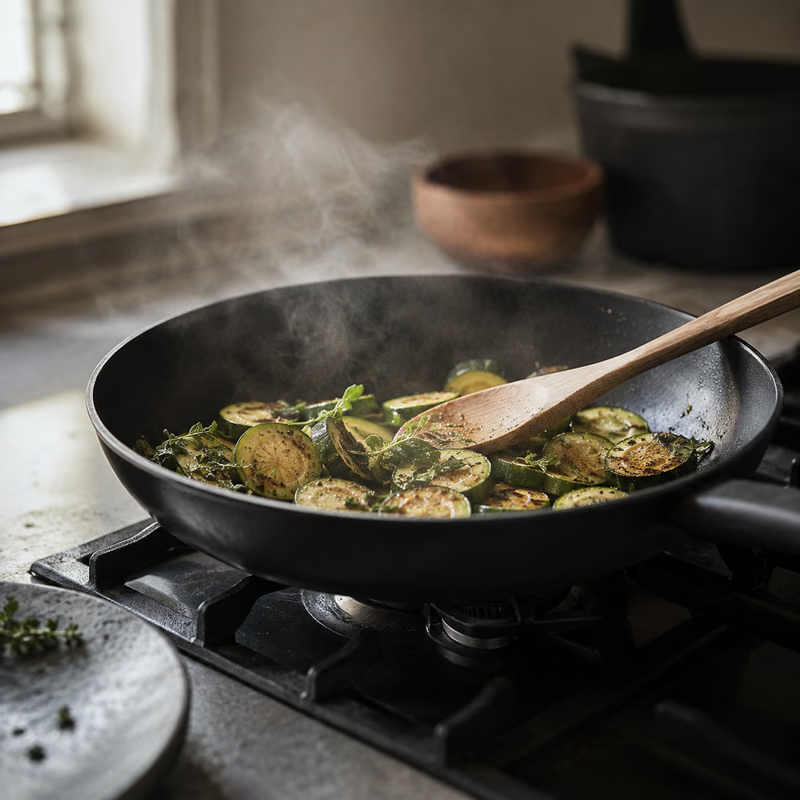
- Upgrade the source, not just the amount. Cook with extra virgin olive oil, eat avocado and nuts, and get omega-3s from wild fish or sardines. Quietly retire the industrial seed oils. Same fat calories, completely different effect on your body.
- Buy organic oils, and do not cheap out here. Fats and oils are concentrated by nature, which means whatever a plant was sprayed with concentrates right along with them, so organic matters more for oils than for almost anything else in your kitchen. And the fraud is real. A large share of what is sold as plain olive oil is quietly cut with cheap industrial seed oil like canola, so you think you are buying the good stuff while you pour inflammation on your salad. Buy certified organic extra virgin olive oil from a source you trust, and treat the bargain bottles with suspicion. This is one place the extra few dollars is worth it.
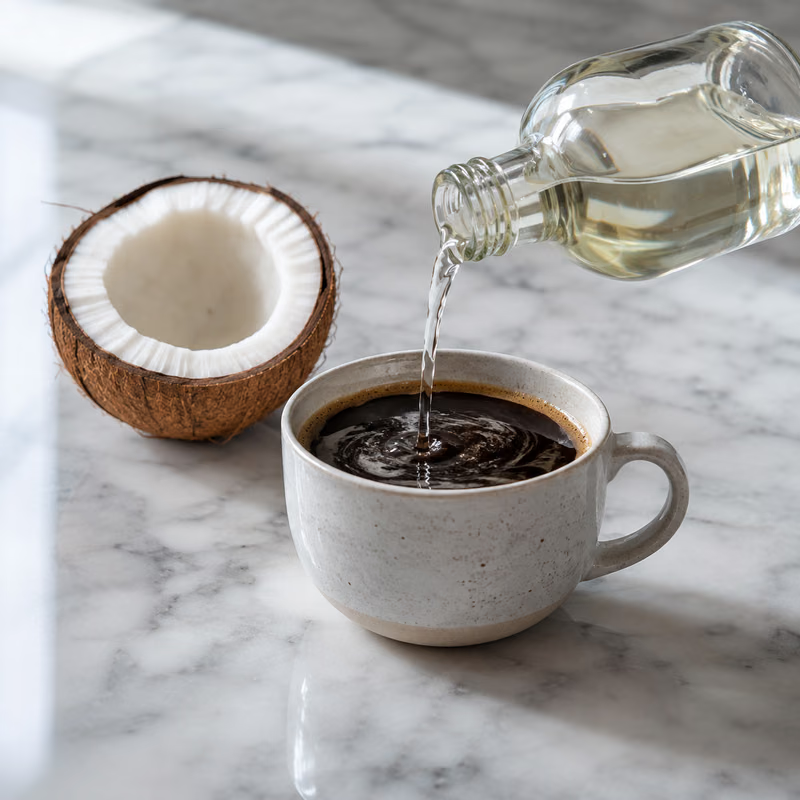
- Eat fat in company, not alone. Fat lands very differently on your body when it rides in with fiber, protein, and real food than when you pour it into coffee by itself. Build meals, not fat bombs.
- Support your bile if you are going higher fat. Bitter foods, plenty of vegetables, staying hydrated, and not crash losing weight all help your gallbladder keep up. If you have a history of gallbladder trouble, talk to a good functional medicine doctor before you ramp fat up.
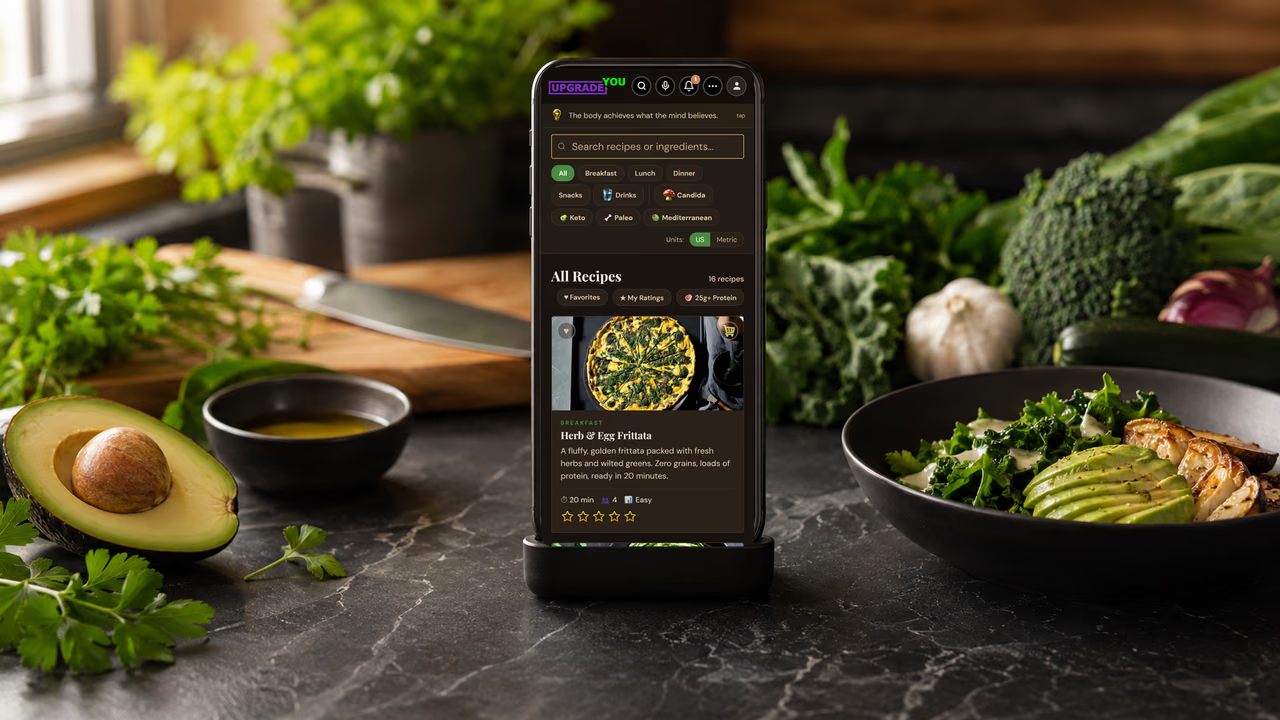
- Test and get help for the real questions. Do not guess about your numbers. The Advanced Lipid Panel measures your ApoB and full cholesterol picture alongside inflammation markers, so you can see what your fat intake is actually doing inside your arteries, and you can order it with the rest of a functional workup. If anything is off, work with a good functional medicine doctor who reads the whole picture instead of one number. For building balanced meals that are not fat extremist in either direction, the Anti-Candida Kitchen app is built to help you eat well across whatever way of eating fits you. And if you are moving fat around as part of clearing a candida overgrowth, read how to starve candida and rebuild your gut and what die-off actually is first, because bile is one of the exits that whole process depends on.
None of this has to happen this week. But at your next meal you can choose enough, from something real.
You are not a furnace to cram fuel into
The whole maximum fat idea rests on a picture of your body as a simple engine. Pour in the highest octane fuel, get the best performance. But you are not a furnace, and you are not a machine you optimize by flooring one input.
You are a living system that thrives on balance and quietly breaks down under excess, even excess of a good thing. Your body is not broken. It is blocked. And for a lot of people chasing the latest diet gospel, the block is a simple, unglamorous mismatch, a system built for enough being handed far too much, and slowly struggling under the load.
Eat fat. Eat good fat. Eat enough of it, and then stop. Your heart, your brain, and that quiet little gallbladder are all counting on you to know the difference.
I will see you in the next one. Eat well, my friend.